

You didn’t stop showing up because you didn’t care.
Most people don’t.
They stop because something inside starts to tighten. The schedule feels heavy. The emotions get loud. Real life keeps knocking — work, kids, bills, relationships. And eventually, missing one day turns into missing three.
Then shame takes over.
As a clinician, I’ve sat with many people who left treatment halfway through. Some were using again. Some weren’t. Almost all of them felt embarrassed walking back through the door.
If that’s where you are, I want you to hear this clearly: you are allowed to return. And you don’t have to commit to a full day of programming to get meaningful support.
Our half-day outpatient treatment services in Falmouth, MA were designed for exactly this space — when you’re not okay, but you also can’t step away from your entire life.
You don’t have to choose between disappearing and going all-in.
1. Be Honest About Why You Stepped Away
Before you make any decision about coming back, slow down.
Ask yourself:
What actually made it hard to continue?
- Was it the length of the day?
- The emotional intensity of groups?
- Transportation or childcare?
- Work pressure?
- The fear that you weren’t “doing it right”?
When someone ghosts treatment, it’s rarely laziness. It’s usually overwhelm.
There’s a difference between not wanting help and not being able to tolerate the structure you were in. If the schedule felt like too much, that doesn’t mean support isn’t right for you. It might mean the format needs to shift.
Shame says, “I failed.”
Reality often says, “That wasn’t sustainable.”
2. Choose Structure That Matches Your Capacity
One of the most common reasons people leave is time commitment.
Full-day programming can be incredibly supportive — but it’s also intense. For some people, especially those juggling work, parenting, or caregiving, it can feel like stepping out of their life completely.
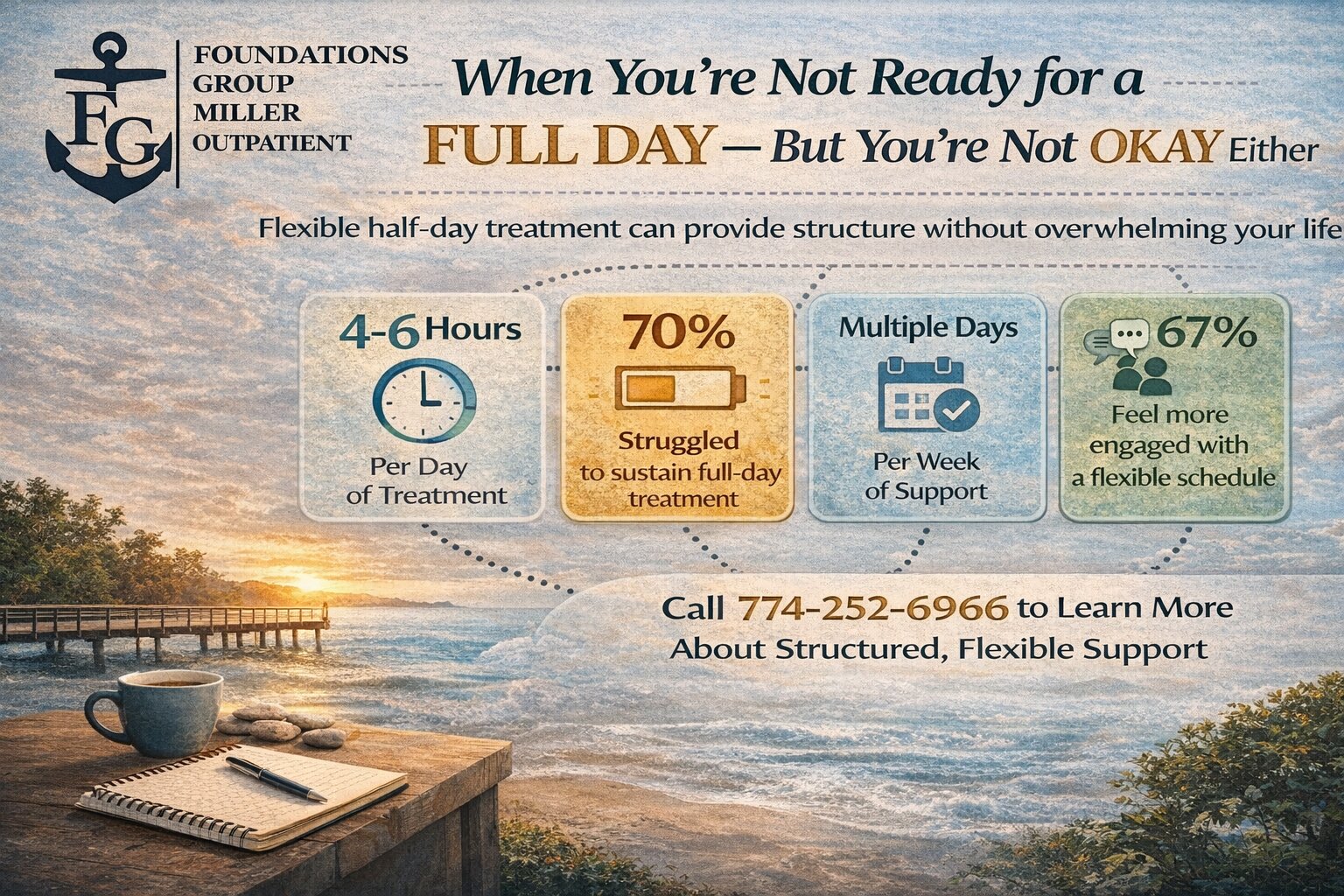
Half-day outpatient treatment offers structured care without requiring you to disappear from your responsibilities. You attend several hours per day, multiple days per week, while still returning home each afternoon.
That matters.
Because when care feels manageable, you’re more likely to stay.
This level of support still provides:
- Consistent therapy
- Group connection
- Clinical oversight
- Accountability
- Skill-building
But it doesn’t ask you to press pause on everything else.
For many people in Falmouth and the surrounding Cape Cod communities, that balance makes the difference between burnout and stability.
3. Rebuild Momentum in Smaller Steps
When someone leaves mid-treatment, they often assume they have to start over completely.
You don’t.
You start from where you are now.
If you learned coping skills before, they’re still there.
If you built relationships in group, that experience still counts.
If you realized something about your patterns, that insight doesn’t disappear.
Half-day outpatient treatment allows you to rebuild consistency gradually. Instead of overwhelming your nervous system with a full-day schedule, you create sustainable rhythm.
And rhythm is what creates change.
In mental health and recovery work, consistency beats intensity almost every time.
4. Let Yourself Come Back Without Drama
Many people hesitate to call because they assume they’ll have to explain themselves.
“They’ll ask why I left.”
“They’ll think I wasn’t serious.”
“They won’t want me back.”
Most clinical teams aren’t focused on what happened weeks ago. We’re focused on what you need now.
Re-entry can be simple:
- A phone call.
- A reassessment.
- A conversation about what didn’t work last time.
- A plan that better fits your life today.
You are not a disruption to the program. You are someone adjusting the plan.
That’s allowed.
5. Notice the Difference When Care Feels Sustainable
I’ve watched clients return to treatment with a more flexible schedule and settle into the work differently.
They’re less defensive.
More honest.
Less focused on “proving” they’re committed.
One client once said:
“When it wasn’t my whole day, I didn’t feel trapped. I felt supported.”
– Outpatient Client, 2024
That word — trapped — comes up often.
Support should feel steady, not suffocating.
When people feel they still have autonomy — their job, their family, their afternoons — they engage differently. They begin applying skills in real time instead of feeling like they’re in a separate world.
That integration can be powerful.
6. Understand That Treatment Is a Tool — Not a Test
Treatment isn’t something you pass or fail.
It’s something you use.
Sometimes full-day programming is appropriate. Sometimes it’s too much. Sometimes life changes and what worked last month doesn’t work now.
Adjusting the level of care doesn’t mean you’re less committed. It means you’re trying to make recovery or mental health support sustainable.
And sustainability is the goal.
If you left before, that doesn’t disqualify you. It gives you information. It tells us what needs to shift.
7. Know That You’re Not the Only One
Many people in Falmouth, MA and the surrounding communities step away from treatment at least once before finding the structure that fits.
They’re not weak.
They’re human.
They’re balancing real-life responsibilities with real internal struggles.
Flexible daytime programming can provide stability without overwhelming you — especially if you’ve already learned that a full-day commitment doesn’t match your current capacity.
You are allowed to try again differently.
Frequently Asked Questions
What if I left treatment and feel embarrassed about calling back?
Embarrassment is incredibly common. It doesn’t mean you shouldn’t call.
Most clinical teams understand that pauses happen. The focus isn’t on judgment — it’s on helping you stabilize and move forward. You won’t be punished for stepping away.
If anything, your return shows courage.
Is part-day care still effective?
Yes — when it matches your needs.
Consistency, engagement, and emotional safety are often more important than intensity alone. For many people, attending several hours per day while maintaining outside responsibilities increases long-term participation.
The key isn’t “more hours.”
It’s the right amount of structure.
Can I work or take care of my family while attending?
That’s often one of the main reasons people choose this level of care.
Because the schedule runs for part of the day, many clients continue working part-time or managing family responsibilities. It allows support to fit into real life instead of replacing it.
If your responsibilities were the reason you left before, this may feel more manageable.
What if I’m using again? Can I still come back?
In many cases, yes.
Programs will complete an assessment to determine the safest level of care. Sometimes part-day treatment is appropriate; other times a higher level of support may be recommended first.
The important part is reaching out. Hiding usually makes things worse. A conversation creates options.
How do I know if this level of care is right for me?
Ask yourself:
- Do I need structure during the week?
- Can I stay safe outside of programming hours?
- Did a full-day schedule feel overwhelming?
- Do I want consistent therapy without stepping away from my entire life?
If those questions resonate, it may be worth exploring.
You don’t have to decide alone. A clinical assessment can help clarify what makes sense.
Will I be with new people if I return?
Possibly. Groups shift over time.
That can feel uncomfortable — but it can also feel like a fresh start. Many returning clients find it relieving to enter a new mix of peers without the weight of past expectations.
You’re not walking into the same moment you left. It’s a new one.
If you’re in Falmouth or nearby and wondering whether you can try again — without committing to a full-day schedule — know that flexible options exist. Support doesn’t have to take over your entire life to be meaningful.
Call (774) 252-6966 or visit our half-day outpatient treatment services in Falmouth, MA to learn more about our half-day outpatient treatment services in Falmouth, MA.