
There’s a unique kind of ache that can show up in the middle of treatment; when the momentum fades, when you skip a day and no one calls, when part of you wonders if you were ever “sick enough” to begin with.
If you’ve stepped back from your program or feel unsure about continuing, you’re not alone and you’re not beyond help. At our Falmouth-based structured outpatient program, we often hear from people who quietly drifted away but are still quietly hurting.
Thinking About Coming Back—But Not Sure How?
You don’t have to explain why you left. You don’t need the perfect words. Just reach out. Call 774-252-6966 to learn more about our half-day care in Falmouth. We’ll meet you where you are.
Signs That Your Current Support Might Not Be Enough
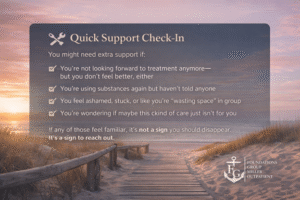
Here are a few gentle signs that it might be time to reconnect: with care, with yourself, or with both.
1. You’re Avoiding Group (or Hoping They Don’t Call on You)
When you start dreading check-ins or hoping you can slip through a session unnoticed, something’s off. Group might feel overwhelming, or you might just feel emotionally flat. Either way, avoidance is a sign—not a failure.
What it could mean:
You might be experiencing a spike in anxiety, depression, or shame that needs its own attention. Or your support needs may have shifted, and your current routine isn’t meeting them.
2. “I’m Fine” Is Hiding a Lot of Noise
You’re functioning. You’re saying the right things. But internally, it’s noisy—racing thoughts, old cravings, new fears. The disconnect between how you look and how you feel can make it harder to ask for help.
What it could mean:
The tools you have might not be enough right now. That’s not your fault. It’s a sign your brain is overwhelmed, and structured support might help quiet the chaos.
3. You Thought You Were Done with Substances—But They’re Creeping Back In
Maybe it started with a drink at a social event. Or a few pills “just to take the edge off.” You haven’t “gone back” entirely, but the line is fuzzier than it used to be.
What it could mean:
Substance use has a way of sliding in through the side door when stress or anxiety aren’t fully managed. This doesn’t mean you failed. It just means something in your support system might need adjusting.
4. You’re Isolating More Than You Realized
You tell people you’re just tired. Or busy. But if you’re honest, the effort to connect feels heavy. You’re slowly shrinking your circle, skipping calls, ghosting group chats.
What it could mean:
Emotional withdrawal is common in the early signs of depression or relapse. It may also signal burnout from trying to “push through” without enough real support. Reconnection can start small.
5. You Ghosted—and You’re Not Sure If You’re Allowed Back
Maybe you missed a week. Or three. Maybe you left mid-session and didn’t come back. That guilt can grow until it convinces you that the door is closed.
Here’s the truth:
The door is still open.
People pause treatment for all kinds of reasons. Life happens. But returning doesn’t require an explanation. Just the willingness to re-engage.
Not Sure If Insurance Covers This? That’s More Common Than You Think
It’s incredibly common to wonder, “Does my plan even cover this kind of care?” Especially when things aren’t urgent, that question alone can delay someone from reaching out.
Here’s what you should know: Foundations Group Miller Outpatient accepts most private insurance plans and MassHealth (Medicaid), too. You don’t need to be in crisis to get support, and you can use the benefits you already have.
And if figuring out your coverage feels confusing? We’re happy to help you check, step by step. No pressure. No judgment. Just a clear look at what’s available to you.
Call 774-252-6966 or start with our insurance verification process.
You’re Still Welcome Here
If your current plan isn’t working, it doesn’t mean you’ve failed. It means you’re still figuring out what kind of support actually fits—and that’s allowed.
At Foundations Group Miller Outpatient, we meet people every day who’ve hit pause and are ready to reconnect. Whether you’re nearby in Cape Cod or just ready to try again, we’re here to talk through what’s next.
Call us at 774-252-6966 or visit us online. The door is still open.