
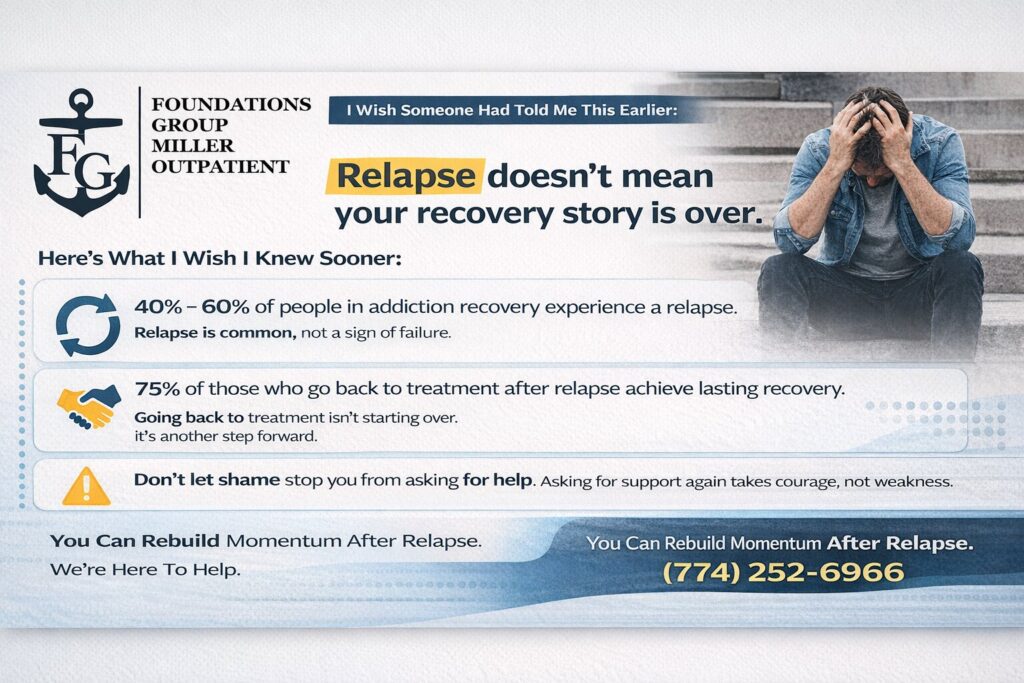
I wish someone had told me this earlier:
Relapse doesn’t mean your recovery story is over.
But when it happened to me, it didn’t feel that way.
After more than 90 days sober, I believed I had crossed some invisible finish line. Life was starting to feel stable again. People trusted me. I trusted myself.
Then slowly, almost quietly, things started slipping.
A few weeks later I found myself looking into structured daytime care and wondering whether going back meant I had failed.
What I discovered instead was something very different.
Recovery hadn’t ended.
It had simply reached a moment where I needed more support.
The Moment Everything Started to Feel Fragile Again
Relapse rarely begins with a single decision.
For me, it started weeks earlier.
Stress had been building at work. My sleep was off. I stopped calling a few people who had been part of my support system.
None of those changes seemed dramatic at the time.
But recovery can be fragile when small habits begin to disappear.
One skipped meeting turns into several.
One bad day becomes a week where you’re running on exhaustion and frustration.
By the time the relapse happened, the groundwork had already been laid.
And sitting in my car afterward, I felt something heavier than fear.
I felt shame.
Why Relapse After Treatment Feels So Personal
Relapse after treatment carries a different emotional weight.
You already told people you were doing better.
Your family started breathing easier. Friends celebrated your progress. You might have even started believing that you were finally “past it.”
So when things unravel, it can feel like you’ve disappointed everyone—including yourself.
I remember thinking:
“How did I end up back here?”
And beneath that question was another one I didn’t want to say out loud.
“Maybe I’m just not someone who can recover.”
That belief is incredibly common after relapse.
And it’s incredibly dangerous.
Because it keeps people from asking for the help that could actually get them back on track.
The Silence That Makes Relapse Worse
For a while, I tried to handle everything on my own.
I avoided people who knew about my recovery. I stopped answering certain texts. I convinced myself I could quietly fix things without anyone noticing.
But addiction thrives in silence.
The longer I avoided reaching out, the heavier everything felt.
Recovery had once felt like a team effort. Suddenly it felt like I was alone again.
That isolation can make relapse spiral faster than people expect.
Eventually, I realized something simple:
If silence helped create the problem, it probably wasn’t going to fix it.
The Hardest Phone Call I Made
Calling for help again was humbling.
I kept expecting someone to sound disappointed.
I imagined the conversation going like this:
“You already had your chance.”
But when I reached out, the response was completely different.
The person on the other end of the phone didn’t sound surprised.
They didn’t sound frustrated.
They sounded calm.
Relapse, they explained, is something many people experience in recovery. It’s not the end of the story—it’s often part of the learning process.
Hearing that didn’t erase the shame immediately.
But it made something else possible.
Hope.
Returning to Support Didn’t Feel Like Starting Over
Walking back into structured care felt strange at first.
Part of me worried people would see me as someone who had failed.
Instead, I met people who understood exactly what I was feeling.
Some were there after relapse. Others had simply realized they needed more structure than they originally thought.
The biggest surprise was that the work felt deeper this time.
During my first round of treatment, I had focused mostly on stopping the behavior.
Now we started looking at the layers underneath it.
Stress patterns. Emotional avoidance. The ways I handled loneliness and pressure.
Recovery became less about avoiding substances and more about learning how to live differently.
What I Learned the Second Time Around
One of the biggest lessons I learned was this:
Recovery isn’t something you complete.
It’s something you practice.
Treatment provides tools and structure, but real life continues throwing challenges your way.
Relationships shift. Responsibilities grow. Stress evolves.
Sometimes the support that worked early in recovery needs reinforcement later.
Returning to structured care didn’t erase my progress.
It strengthened it.
In many ways, I understood recovery better the second time than I did the first.
The Moment I Stopped Calling Myself a Failure
There was a moment during group when someone said something that changed how I viewed my relapse.
They said:
“Relapse doesn’t cancel recovery. It just means recovery needs attention again.”
That sentence stuck with me.
For weeks I had been carrying the belief that I had ruined everything.
But sitting there, listening to other people share similar experiences, I realized something powerful.
Recovery stories rarely move in straight lines.
They curve, pause, stumble, and continue.
A day treatment program gave me the structure to rebuild momentum without feeling like my life had completely stopped again.
And slowly, the shame that had been weighing me down started turning into something else.
Determination.
What I Wish Someone Had Told Me Earlier
If you’re reading this after a relapse, there are a few things I wish someone had told me sooner.
First, relapse doesn’t erase the work you’ve already done.
Everything you learned still exists inside you.
Second, asking for help again is not embarrassing.
It’s brave.
And third, recovery is not a test you pass or fail.
It’s a process that sometimes requires returning for more support.
Think of recovery like learning a difficult instrument.
Missing a note doesn’t mean you stop playing forever.
It means you slow down, practice again, and keep going.
FAQ: Questions Alumni Often Ask After Relapse
Does relapse mean treatment didn’t work?
No. Many people experience relapse during recovery. The skills and insights gained during treatment often continue helping people rebuild stability afterward.
Should I go back to treatment if I’ve relapsed?
For some people, returning to structured support can help re-establish stability and reinforce recovery tools. Speaking with professionals can help determine what type of support may be helpful.
How do I deal with the shame of relapse?
Shame is very common after relapse, but it can prevent people from seeking help. Talking with trusted peers, counselors, or recovery professionals can help shift that shame into motivation for growth.
What if I’m afraid people will judge me?
Many recovery communities understand that relapse can be part of the journey. Most people who work in treatment have seen countless individuals rebuild their recovery after setbacks.
Is it possible to recover after relapse?
Absolutely. Many people who experience relapse eventually achieve long-term recovery. Returning to support often strengthens future success.
How soon should I seek help after a relapse?
The sooner support is reintroduced, the easier it can be to stabilize recovery. Early intervention helps prevent patterns from becoming more difficult to manage.
Relapse can make recovery feel like it’s slipping away.
But returning to support can help rebuild momentum.
Call (774) 252-6966 or visit our Day treatment program services to learn more about our Day treatment program services in Cape Cod, MA.