

A lot of people don’t leave treatment because they don’t care about getting better.
They leave because life keeps moving.
Work deadlines don’t stop. Rent is still due. Kids still need rides to school. Family members still need you. And somewhere in the middle of all that, you’re supposed to make room for recovery.
If you’ve found yourself wondering whether you need more support than weekly therapy but can’t imagine stepping away from work completely, you’re not alone. Many people reach a point where they know something needs to change but aren’t sure how to fit treatment into a life that already feels overloaded.
That’s why understanding different levels of outpatient care matters. If you’re exploring options like half-day outpatient treatment, it can help to focus less on program names and more on what level of support will actually help you move forward.
Start With the Reality of Where You Are Today
One mistake many people make is choosing treatment based solely on what feels easiest to schedule.
The problem is that convenience and effectiveness aren’t always the same thing.
If you’ve been struggling for months, missing work because of mental health symptoms, dealing with increasing substance use, or feeling like your life is becoming harder to manage, a lower level of support may not provide enough structure to create meaningful change.
Think of it this way: if your house has a small leak, a bucket might solve the problem. If the roof is collapsing, you need a larger solution.
Treatment works similarly.
The goal isn’t to choose the smallest amount of help possible. The goal is to choose the amount of help that gives you the best chance of getting better.
Why Work Concerns Stop So Many People From Getting Help
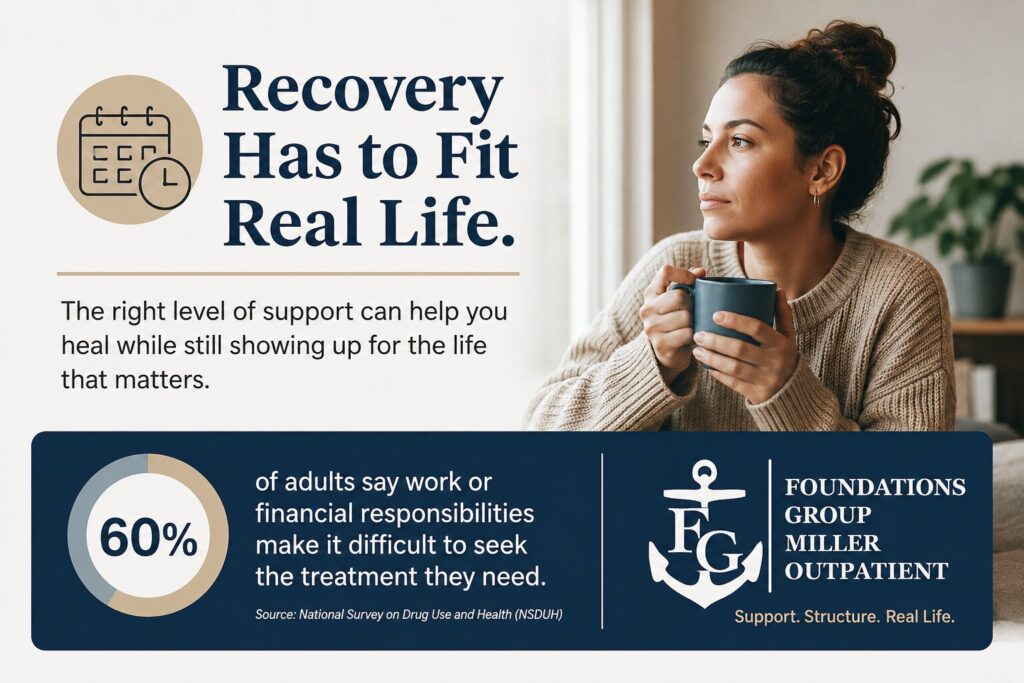
For many adults, treatment decisions are tied directly to employment concerns.
People worry about:
- Losing income
- Falling behind at work
- Explaining absences to coworkers
- Using paid time off
- Appearing unreliable
- Letting their family down financially
These concerns are real.
At the same time, untreated mental health challenges and substance use issues often affect work performance long before someone enters treatment. Missed deadlines, decreased focus, absenteeism, burnout, and strained workplace relationships can quietly build over time.
Sometimes the question isn’t whether treatment will affect work.
It’s whether avoiding treatment is already affecting work.
Looking honestly at that reality can help clarify what level of support you actually need.
More Support Doesn’t Mean Giving Up Your Entire Life
Many people assume that choosing a more structured daytime program means putting everything else on hold.
In reality, treatment exists on a spectrum.
Some programs are designed for people who need significant support while still living at home and maintaining important responsibilities.
Others are built for people who need less structure and greater flexibility.
Many individuals continue working while participating in outpatient treatment. Depending on the schedule, some maintain part-time employment, work remotely, adjust shifts temporarily, or coordinate treatment around professional obligations.
The key question isn’t simply, “Can I keep working?”
The better question is, “Can I keep working while giving myself a realistic chance to recover?”
Those aren’t always the same thing.
Pay Attention to Your Energy, Not Just Your Availability
A calendar only tells part of the story.
Many people technically have enough hours in the day for treatment, work, family obligations, and everything else they’re juggling.
What they don’t have is enough energy.
You might be functioning on the surface while feeling completely exhausted underneath. Maybe you’re spending every evening recovering from the day. Maybe your anxiety is constant. Maybe you’re using substances to get through work and then trying to recover from that afterward.
If that’s the case, a less intensive treatment schedule may not provide enough support to create lasting change.
Ask yourself:
- Am I struggling between appointments?
- Do I frequently feel overwhelmed?
- Have my symptoms been getting worse?
- Have I already tried a lower level of support without success?
- Do I spend most of my time simply trying to get through the day?
Your answers can reveal a lot about what level of care may be appropriate.
A Simple Way to Think About Different Levels of Support
Many people researching treatment eventually start comparing programs. The discussion often becomes focused on schedules, hours, and terminology.
While those details matter, it can be helpful to think about support levels in plain language.
| Level of Support | Typical Experience |
|---|---|
| Weekly Therapy | Occasional professional guidance with significant independence between sessions |
| Multi-day weekly treatment | Regular support several days per week while maintaining many daily responsibilities |
| Structured daytime care | Significant therapeutic support and accountability during the week while continuing to live at home |
| Round-the-clock support | Full-time treatment environment with comprehensive daily structure |
The right option depends on your current needs, not anyone else’s.
If you’re researching the PHP vs IOP difference, it’s important to remember that neither option is “better.” They’re designed for different levels of support.
If You Left Treatment Before, You’re Not Starting Over
This part doesn’t get talked about enough.
A lot of people searching for treatment information aren’t doing it for the first time.
Maybe you attended a program and stopped showing up.
Maybe life got busy.
Maybe you felt embarrassed.
Maybe you weren’t ready.
Maybe things improved for a while and then got difficult again.
If that’s your story, you’re far from alone.
Many people leave treatment and later return. Some come back after a few weeks. Others return after several months or even years.
Recovery isn’t a straight line.
One of the biggest myths in treatment is that leaving means you’ve somehow failed.
The truth is that every experience teaches you something. If a previous schedule didn’t work, that information can help you choose a better fit now.
The door is often much more open than people expect.
Think About the Next Three Months, Not Just Next Week
When we’re stressed, it’s natural to focus on immediate problems.
Can I make treatment fit into next week’s schedule?
Can I get coverage for my shift?
Can I manage transportation?
Those questions matter.
But they shouldn’t be the only questions.
Ask yourself:
What happens if nothing changes over the next three months?
What happens if my symptoms continue getting worse?
What happens if I keep delaying treatment because the timing never feels perfect?
Many people discover that a temporary adjustment to their work schedule creates long-term improvements in their health, relationships, and overall quality of life.
Sometimes short-term inconvenience creates long-term stability.
Recovery Should Fit Real Life—But Real Life Has to Make Room for Recovery
Most people aren’t looking for the most intensive treatment available.
They’re looking for something realistic.
Something they can stick with.
Something that helps without making life impossible.
Finding that balance is one of the most important decisions you’ll make.
The good news is that treatment doesn’t have to be all or nothing. There are options designed for people who still need to work, care for family members, and maintain responsibilities while receiving meaningful support.
The goal isn’t to stop living your life.
The goal is to build a life that becomes easier to live.
Frequently Asked Questions
Can I work while attending a structured daytime treatment program?
Many people do. Depending on scheduling, some continue working part-time, remotely, or with temporary adjustments to their work hours. Treatment teams can often help you explore scheduling options that fit your responsibilities.
Which option is more intensive?
Structured daytime care generally involves more treatment hours and greater support throughout the week than multi-day weekly treatment. The right choice depends on your symptoms, stability, and recovery needs.
What if I started treatment before and didn’t finish?
You’re not alone. Many people return to treatment after stepping away. Leaving a program doesn’t mean you’re banned from receiving help in the future.
How do I know if I need more support?
If you’re struggling between appointments, feeling increasingly overwhelmed, experiencing worsening symptoms, or finding it difficult to function day-to-day, it may be worth discussing a higher level of support with a treatment professional.
Will treatment affect my job?
Treatment can require schedule adjustments, but untreated mental health and substance use challenges often affect work performance as well. The goal is to find a treatment plan that supports both your recovery and your long-term ability to function at work.
Is outpatient treatment confidential?
Yes. Treatment providers are required to protect your privacy and follow confidentiality regulations. Your participation in treatment is generally not shared without your consent except in limited legal situations.
Call 774-252-6966 or visit our half-day outpatient treatment services to learn more about our half-day outpatient treatment services.