

Sometimes the realization is subtle.
Nothing catastrophic has happened. You’re still showing up for work. You’re still answering texts and meeting responsibilities.
But inside, something feels misaligned.
Maybe alcohol or substances have become the easiest way to cope with stress. Maybe you’ve started noticing patterns that don’t sit right anymore. Or maybe you just have a quiet sense that life could feel clearer, calmer, and more intentional than it does right now.
Many people reach this moment before they fully understand what they need.
For some, exploring structured daytime care becomes the next step toward figuring that out.
If you’re sober curious—or simply questioning your relationship with substances—you don’t need to wait for things to fall apart before seeking support.
You just need to start somewhere.
Step 1: Pay Attention to the Quiet Signals
Change rarely begins with a dramatic wake-up call.
More often, it starts with small signals that keep repeating.
You might notice things like:
- waking up tired even after a full night’s sleep
- feeling more anxious or irritable than usual
- needing alcohol or substances to relax after stressful days
- noticing that certain habits are becoming harder to control
These signals can be easy to dismiss.
Many people tell themselves:
“I’m just stressed.”
“It’s not that bad.”
“I’ll deal with it later.”
But the fact that you’re noticing these patterns matters.
Awareness is often the very first step toward meaningful change.
Think of it like a dashboard warning light in your car. Ignoring it might feel easier in the moment, but paying attention early can prevent much bigger problems later.
Step 2: Let Curiosity Replace Judgment
One of the biggest barriers to seeking help is self-judgment.
People often believe they should already have things under control. They compare themselves to extreme stories of addiction and convince themselves they don’t qualify for support.
But recovery isn’t reserved for people at the lowest point of their lives.
Many people enter treatment simply because they’re curious about what life might feel like if things were different.
Instead of asking:
“Am I bad enough to need help?”
Try asking:
“Would my life feel better if something changed?”
Curiosity opens the door to exploration without forcing you into labels or assumptions.
And that exploration can lead to clarity.
Step 3: Create Time to Actually Work on Yourself
One reason people stay stuck is simple: life is busy.
Work schedules, family responsibilities, and social obligations can make it difficult to focus on personal growth.
You might intend to reflect, journal, or make healthier choices—but the momentum of daily life keeps pulling you back into familiar routines.
Structured daytime care creates space in the middle of your week to step outside that cycle.
Instead of trying to change your life in spare moments between responsibilities, you step into an environment designed to help you focus.
During this time, you can:
- reflect on patterns in your life
- explore emotional triggers
- build healthier coping skills
- learn strategies for lasting change
It’s not about escaping life.
It’s about strengthening the foundation you’re living on.
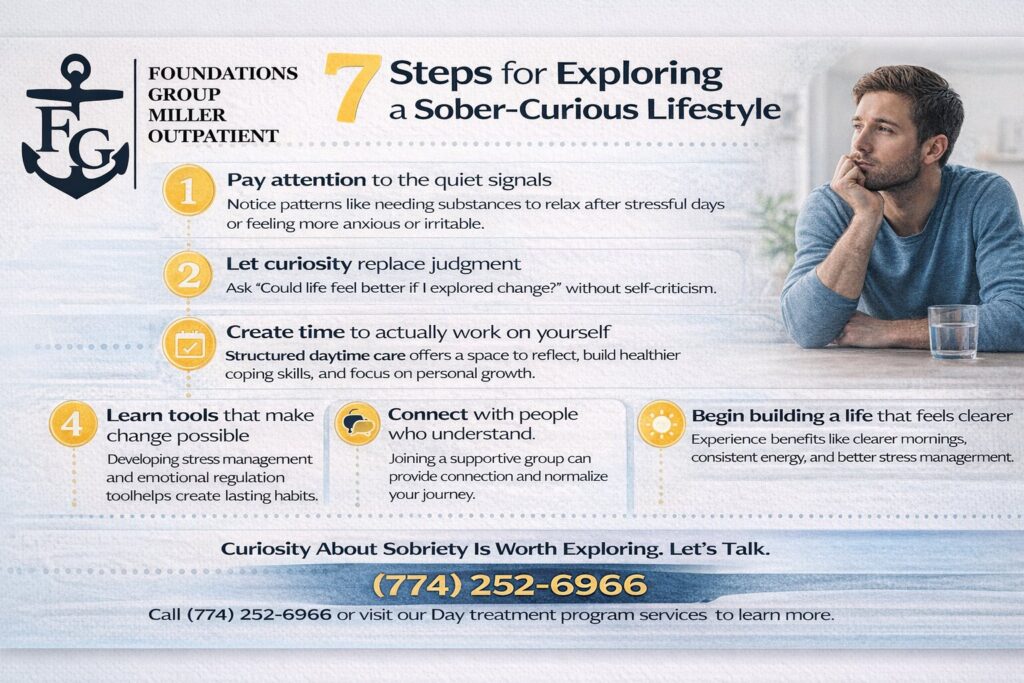
Step 4: Learn Tools That Make Change Possible
Many people try to change habits through sheer willpower.
They set rules for themselves, promise to cut back, or attempt to manage everything alone.
Sometimes that works for a short time.
But stress, social pressure, and old habits often pull people back into familiar patterns.
Professional support focuses on something deeper: building tools.
These tools help you understand why certain behaviors developed and how to respond differently moving forward.
Some of the most valuable skills people learn include:
- recognizing emotional triggers before they escalate
- managing stress without relying on substances
- communicating more honestly with friends and family
- building routines that support physical and mental health
When you develop these tools, change becomes less fragile.
Instead of relying on motivation alone, you begin building systems that support the life you want.
Step 5: Connect With People Who Understand the Questions You’re Asking
If you’re sober curious, you may feel like you’re navigating unfamiliar territory.
Your friends might still drink heavily. Social events might revolve around alcohol. Conversations about cutting back might feel awkward or misunderstood.
That isolation can make change feel harder.
Being around others who are exploring similar questions can make a powerful difference.
In supportive group environments, people often discover something surprising:
They’re not alone.
Others are also questioning their habits. Others are wondering what life could look like with more clarity and balance.
These conversations can normalize experiences that once felt confusing or lonely.
And connection often becomes one of the strongest motivators for growth.
Step 6: Begin Building a Life That Feels Clearer
When people think about change, they often focus on what they might lose.
Less drinking.
Different routines.
New boundaries.
But many people are surprised by what they gain.
Clearer mornings where your mind feels sharp.
More consistent energy throughout the week.
Relationships that feel more genuine and supportive.
The ability to handle stress without feeling overwhelmed.
One person once described their recovery this way:
“I didn’t realize how much noise was in my life until things started getting quiet.”
Recovery isn’t about restricting your life.
It’s about removing the things that were quietly making it harder to live.
Step 7: Take the First Step — Even if You’re Still Unsure
Many people delay treatment because they believe they need to feel fully ready.
The truth is that readiness often grows after you begin.
Most people arrive with mixed emotions: hope, doubt, curiosity, and fear all at once.
That’s normal.
Recovery doesn’t require certainty.
It requires a willingness to explore.
A day treatment program can provide the structure and support needed to explore those questions in a safe and encouraging environment.
You don’t have to have everything figured out before taking the first step.
Sometimes the path becomes clear only after you start walking it.
FAQ: Questions Sober-Curious People Often Ask
Do I have to stop drinking completely to seek help?
Not necessarily. Many people begin treatment while they are still figuring out what kind of relationship they want with alcohol or substances. The goal is to create space for honest reflection and healthier choices.
What if I’m still functioning in my daily life?
Many individuals seeking support are still managing work, relationships, and responsibilities. Treatment isn’t only for people whose lives have completely unraveled.
Will people judge me for exploring treatment?
Treatment environments are built around understanding and compassion. Most people there are asking similar questions about their lives and habits.
What happens during structured daytime care?
During structured support, individuals spend time focusing on therapy, skill-building, and personal growth. The goal is to help people develop tools that support lasting change while remaining connected to their daily lives.
What if I’m not completely sure I need help?
Uncertainty is common. Many people start by simply asking questions or learning about their options. That first conversation can help clarify what kind of support might be helpful.
How do I know if this level of support is right for me?
Speaking with a treatment professional can help you understand whether structured daytime care fits your needs. Everyone’s situation is different, and guidance can help you make an informed decision.
Real change often begins with a simple realization:
Something in my life could be better.
If you’ve reached that moment, support is available.
Call (774) 252-6966 or visit our Day treatment program services to learn more about our Day treatment program services in Cape Cod, MA.