

You hear it again: “I’ve got it under control.”
And maybe part of you wants to believe it. You want your child to be okay. You want this phase to pass.
But something in you doesn’t settle.
It’s not just what they’re saying—it’s what you’re seeing. The tension. The exhaustion. The way their life seems smaller than it used to be.
Many parents who eventually explore structured daytime care describe this exact moment: “Nothing looked bad enough on paper… but nothing felt right either.”
That feeling matters more than you think.
The Gap Between What They Say and What You See
Young adults—especially around 20—are in a strange in-between space. They want independence, but they’re still figuring out how to carry the weight of adulthood.
So when things start to slip, they often respond by doubling down:
- “I just need to push through.”
- “It’s stress. Everyone deals with this.”
- “I don’t need help.”
From a clinician’s perspective, this isn’t surprising. It’s a mix of pride, fear, and confusion. Admitting things aren’t under control can feel like failure.
But here’s what parents often notice:
- Their child says they’re fine, but their behavior is inconsistent
- They insist they’re managing, but their energy is depleted
- They minimize symptoms that are clearly interfering with daily life
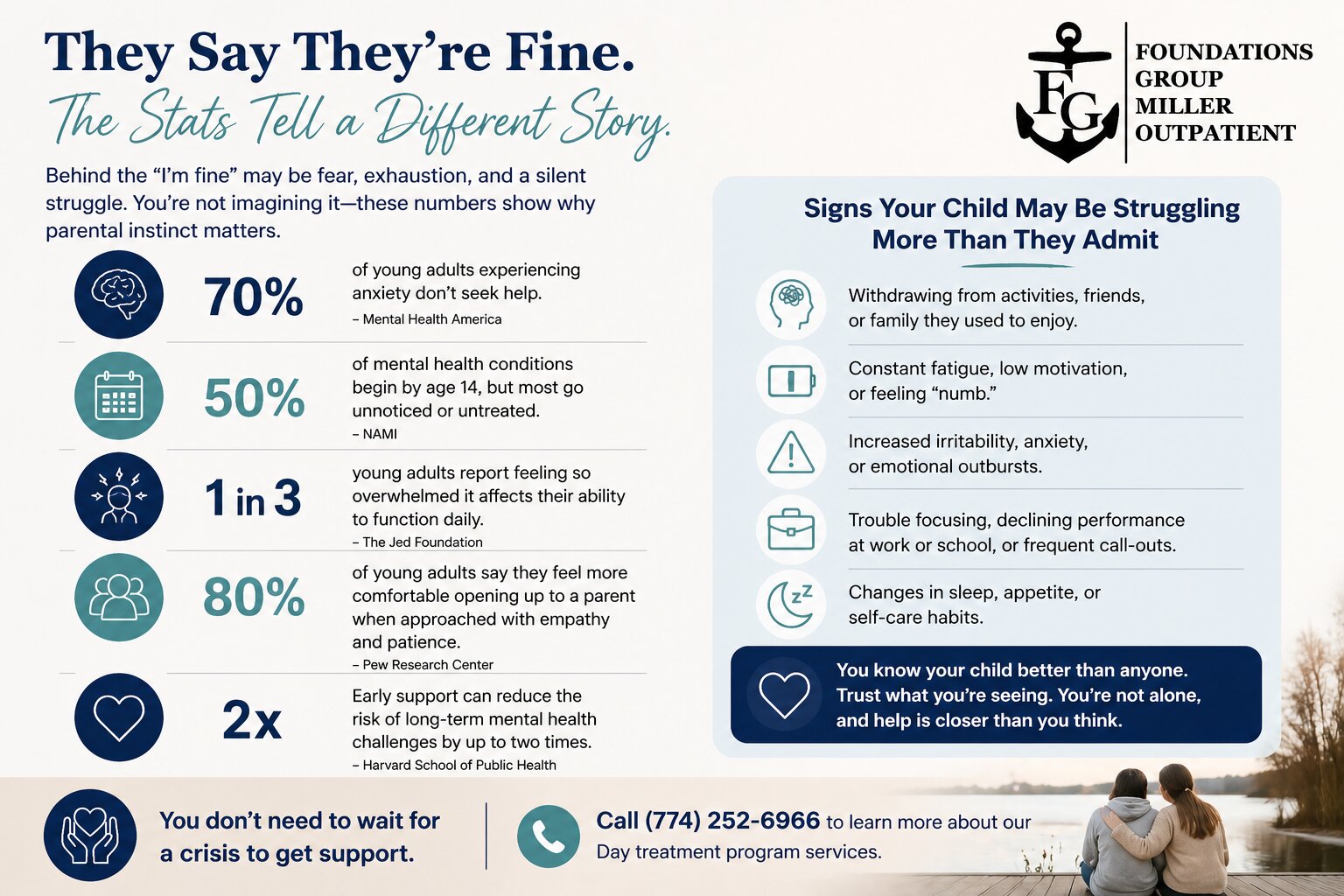
That disconnect—between words and reality—is one of the earliest signs that more support might be needed.
Panic Isn’t Always Loud, But It’s Always Disruptive
We tend to think of panic as something dramatic. Crying. Hyperventilating. Total shutdown.
But in real life, it’s often quieter.
It can look like:
- Sitting in a car before work, unable to go inside
- Calling out sick more often without a clear reason
- Zoning out during conversations
- Avoiding responsibilities they used to handle
Some young adults live in a near-constant state of internal alarm. They’re functioning—but barely.
And they don’t always tell you the full truth.
Instead, they search privately. They wonder why they can’t handle things like everyone else. They look for answers like panic attacks at work help without ever saying those words out loud.
That silence can be confusing for families. But it doesn’t mean nothing is happening.
It means your child might be struggling more than they can admit.
“They’re Still Functioning” Isn’t the Whole Story
One of the most difficult parts of this stage is that your child may still look “okay” from the outside.
They might:
- Have a job
- Keep up appearances socially
- Stay out of obvious crisis
But functioning doesn’t mean thriving.
In clinical terms, we often look at how much effort it takes for someone to maintain their daily life.
If your child is:
- Constantly overwhelmed
- Emotionally drained
- Struggling to complete basic tasks
- Avoiding parts of their life
Then what looks like “functioning” may actually be survival mode.
And survival mode isn’t sustainable.
Why Weekly Therapy Sometimes Isn’t Enough
You may have already encouraged therapy. Maybe they’ve even tried it.
And that’s a meaningful step.
But here’s what many families don’t realize:
Not all levels of care are designed for the same level of need.
Weekly therapy works best when:
- Someone can reflect between sessions
- They’re stable enough to apply what they learn
- Symptoms aren’t interfering with daily functioning
When anxiety or panic is happening every day, that model can start to break down.
Your child might:
- Forget what they discussed in therapy by the next crisis
- Feel overwhelmed trying to apply tools alone
- Need support in real-time, not just once a week
This isn’t a failure of therapy. It’s a sign that more consistent support may be needed right now.
The Middle Ground Most Parents Aren’t Told About
There’s a common belief that the only “serious” option is hospitalization.
So parents wait.
They wait for things to get worse.
They wait for something undeniable to happen.
But there’s another path—one that sits between weekly therapy and inpatient care.
It’s structured, daytime-based treatment that provides:
- Support several days a week
- A predictable routine
- Access to clinicians throughout the day
- A space to stabilize without leaving home entirely
This kind of care meets people in the gray area—the space where things aren’t okay, but they’re not catastrophic either.
And that’s where many young adults actually are.
You’re Not Overreacting—You’re Paying Attention
Parents often second-guess themselves in this phase.
You might think:
- “Am I making this bigger than it is?”
- “What if I push too hard?”
- “What if they get upset with me?”
Those are real concerns. They come from love.
But here’s something I want you to hear clearly:
Noticing a pattern is not the same as overreacting to a moment.
If you’ve been watching this unfold—day after day, week after week—your perspective matters.
You’re not trying to control them.
You’re trying to protect them.
And there’s a difference.
What It Can Look Like When Things Start to Shift
When the right level of support is introduced, something subtle begins to change.
Not overnight. Not perfectly.
But gradually:
- The pressure eases
- The day feels more manageable
- They don’t have to fight everything alone
Sometimes the biggest relief isn’t immediate “happiness.”
It’s the absence of constant overwhelm.
It’s the first quiet moment where your child can breathe without bracing for the next wave.
FAQ: What Parents Often Ask in This Stage
How do I know if this is serious enough for more support?
If your child’s mental health is interfering with their daily life—work, relationships, basic functioning—it’s worth exploring additional support. You don’t need a crisis to take it seriously.
What if they refuse help?
This is very common. Instead of pushing, focus on expressing what you’ve noticed and how it’s affecting you. Keep the door open. Sometimes repeated, calm conversations are what lead to change.
Is this just normal stress for their age?
Stress is normal. Being consistently overwhelmed, panicked, or unable to function is not. The difference is in the impact it’s having on their life.
Will more structured care mean they’re “really sick”?
No. It means they need more support right now. Mental health care isn’t about labels—it’s about matching the level of care to the level of need.
What if I’m wrong?
Most parents who ask this question aren’t wrong—they’re early. And early support is often what prevents things from escalating.
You’re Allowed to Want More for Them
You’re allowed to want your child to feel steady again.
You’re allowed to want them to wake up without dread.
You’re allowed to believe there’s a better way for them to live.
This isn’t about taking control away from them.
It’s about giving them access to the kind of support they may not know how to ask for yet.
If this feels close to home, you don’t have to figure it out on your own. Call 774-252-6966 or explore your options for day treatment program services to learn more about our Day treatment program services in Massachusetts.