

There is one concern that keeps many people from reaching out for help:
“I can’t lose my job.”
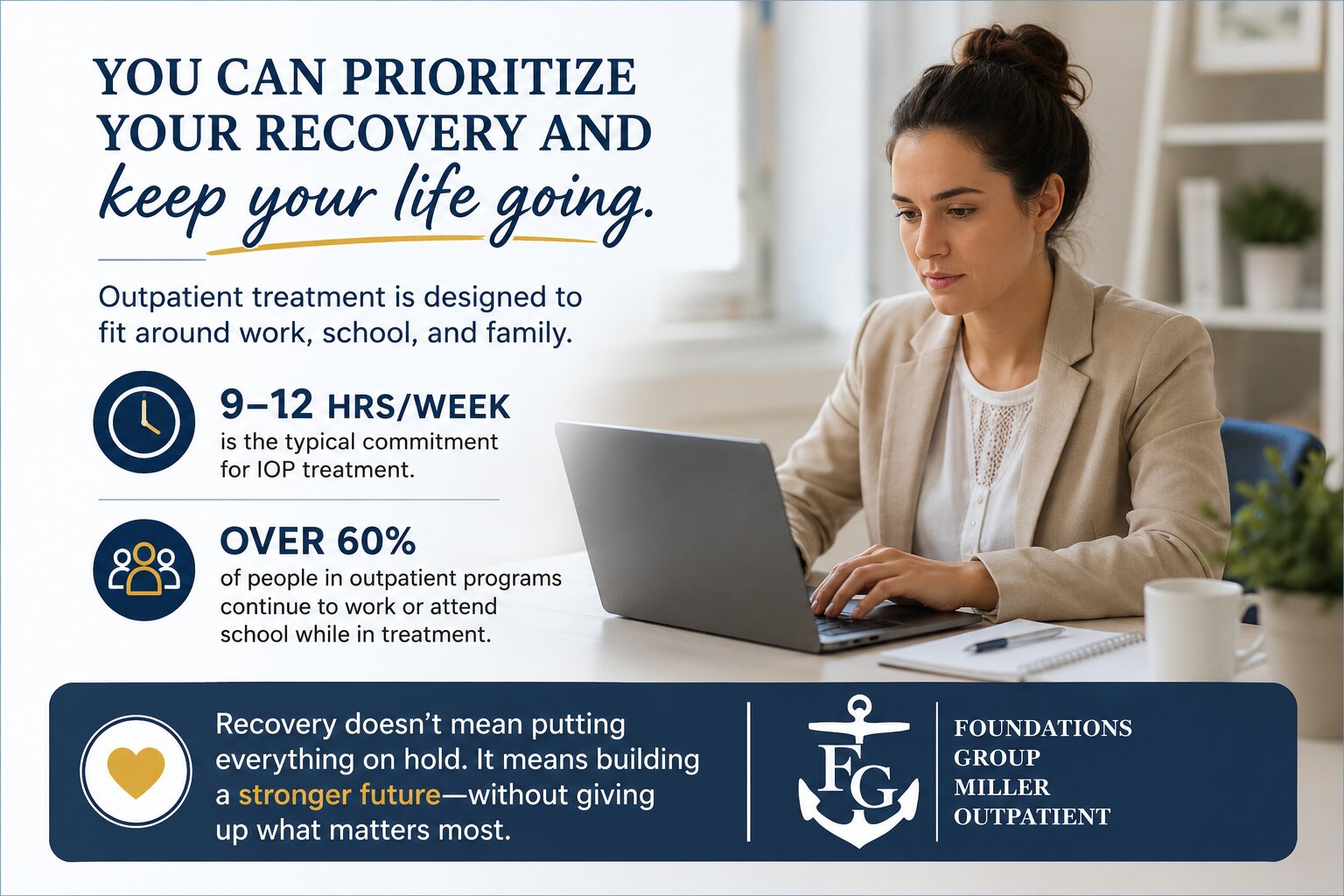
If you’re supporting a family, paying a mortgage, or simply trying to keep your life together, the thought of stepping away from work can feel impossible. The good news is that treatment doesn’t always require putting your entire life on hold. Many people continue working while receiving outpatient addiction treatment because these programs are specifically designed to fit around work, school, and family responsibilities.
If you’ve been asking can you work while in rehab, the answer is often yes—depending on the level of care you need. Understanding how outpatient treatment works can help you make an informed decision without assuming you’ll have to choose between your recovery and your career.
Yes—Many People Continue Working During Treatment
The word “rehab” often brings to mind residential treatment where someone lives at a treatment facility for several weeks.
While residential care is the safest choice for some people, it is not the only option.
Outpatient treatment allows individuals to attend therapy, counseling, education, and recovery programming while continuing to live at home. That means many people can keep working, caring for children, attending school, and managing other responsibilities while receiving professional support.
The key is making sure outpatient care is appropriate for your clinical needs.
If your withdrawal symptoms are medically dangerous or your substance use is severe, your treatment team may recommend beginning with residential addiction treatment near Cape Cod before transitioning into outpatient care.
How Outpatient Treatment Fits Around Your Schedule
One of the biggest advantages of outpatient care is flexibility.
Programs are designed to support recovery while recognizing that many participants have jobs, families, and other responsibilities.
Intensive Outpatient Programs (IOP)
Intensive Outpatient Programs generally involve approximately 9 to 12 hours of treatment each week.
Many IOPs offer:
- Evening sessions after work
- Morning programs before standard work hours
- Several treatment days each week
- Individual counseling alongside group therapy
This structure allows many people to maintain full-time or part-time employment while participating in treatment.
Standard Outpatient Programs
Traditional outpatient care typically involves fewer weekly hours.
Depending on individual needs, treatment may include:
- Weekly individual therapy
- Group counseling
- Medication management appointments
- Recovery planning sessions
For people with stable recovery needs, this schedule often fits comfortably around a normal workweek.
What Determines Whether You Can Keep Working?
The biggest factor is not your employer.
It’s your clinical needs.
Outpatient treatment often works well for people who:
- Have mild to moderate substance use disorders
- Do not require medically supervised detoxification
- Can remain safe outside treatment hours
- Have stable housing
- Are motivated to participate consistently
- Can avoid substance use between appointments
However, if someone is experiencing severe alcohol or benzodiazepine withdrawal, repeated overdoses, significant medical complications, or an unsafe living environment, continuing to work immediately may not be the safest option.
Recovery sometimes begins by temporarily stepping away from work to receive more intensive treatment.
That decision protects both long-term health and future employment.
Understanding General Workplace Protections
Many people worry that seeking treatment automatically means losing their job.
While every situation is different, there are legal protections that may apply.
Family and Medical Leave Act (FMLA)
For eligible employees working for covered employers, the Family and Medical Leave Act (FMLA) generally allows up to 12 weeks of unpaid, job-protected leave for qualifying medical conditions, including treatment for substance use disorders.
FMLA protects treatment—not active substance use.
Eligibility depends on several factors, including employer size and length of employment.
Americans with Disabilities Act (ADA)
People who are in recovery from substance use disorders may have protections under the Americans with Disabilities Act (ADA).
The ADA may require employers to provide reasonable accommodations in certain situations, but these protections have important limitations and depend on individual circumstances.
Because employment laws are complex, it’s important to speak with your Human Resources department or an employment attorney if you have questions about your specific rights.
This article provides general educational information and should not be considered legal advice.
Do You Have to Tell Your Employer You’re in Treatment?
Not necessarily.
Many people assume they must explain every detail of why they need schedule changes or medical leave.
In many situations, you are only required to provide the documentation your employer requests under its leave or attendance policies.
You generally do not have to share every aspect of your medical history or discuss your diagnosis with coworkers.
If you need time away from work, consider:
- Speaking with Human Resources rather than your direct supervisor if appropriate
- Using general medical leave language
- Keeping personal health information private unless disclosure is necessary
- Following your employer’s procedures for requesting leave or schedule adjustments
Your treatment team can often provide documentation verifying participation in treatment when appropriate.
When Work May Need to Take a Temporary Back Seat
Many high-functioning professionals delay treatment because they have managed to continue working despite growing substance use.
Being able to keep a job does not always mean someone is healthy.
If work has become the reason you postpone getting help, it’s worth asking a different question:
What happens if nothing changes?
Continuing untreated addiction often increases the risk of:
- Poor work performance
- Missed deadlines
- Workplace accidents
- Relationship difficulties
- Financial problems
- Job loss
- Serious medical complications
Taking several weeks away for medically necessary treatment may ultimately protect your career rather than jeopardize it.
Recovery frequently allows people to return to work healthier, more focused, and better equipped to manage stress.
Choosing the Right Level of Care Matters Most
Many people begin their search by asking whether they can work during treatment.
A better question is whether outpatient care is clinically appropriate.
The safest treatment plan is the one that matches your individual needs.
During an assessment, clinicians consider:
- Substance use history
- Withdrawal risk
- Mental health symptoms
- Medical conditions
- Home environment
- Previous treatment experiences
- Work responsibilities
- Recovery goals
If outpatient treatment is appropriate, many individuals successfully continue working while receiving care. If more intensive support is needed first, transitioning into outpatient rehab in Falmouth MA after residential treatment often provides a smoother path toward long-term recovery.
You Don’t Have to Choose Between Your Career and Your Recovery
Many people believe asking for help means giving up everything they’ve worked to build.
In reality, getting treatment is often what allows people to keep the life they’ve built.
Whether you continue working throughout outpatient treatment or temporarily step away to receive more intensive care, the goal remains the same: creating lasting recovery while protecting your future.
Keeping your job while getting help is possible—that’s exactly what outpatient is built for. If you want to talk through scheduling and what treatment would actually look like for you, our outpatient addiction treatment on Cape Cod team is ready to help. Call (774) 252-6966 today to speak with a member of our team.
Frequently Asked Questions
Can I work full-time while receiving addiction treatment?
Many people can continue working full-time while participating in outpatient treatment. Evening, morning, and flexible scheduling options often make it possible to balance work with recovery, provided outpatient care is clinically appropriate.
Will my employer know I’m receiving treatment?
Not necessarily. In many situations, you only need to provide the documentation required for medical leave or schedule adjustments. You are generally not required to disclose your diagnosis to coworkers, though employment policies and legal requirements vary.
What if I need more treatment than outpatient care?
If a clinical assessment shows that residential treatment is the safest option, taking temporary medical leave may provide the best opportunity for recovery. Many people transition into outpatient care afterward as they return to work and daily life.