
Making the decision to seek help for alcohol or drug use is a big step. One of the first questions many people ask is whether treatment outside of a residential facility can truly make a difference.
The honest answer is yes—but only when the level of care matches a person’s needs. If you’re exploring your options, learning more about outpatient addiction treatment can help you understand how this approach works, who it is designed for, and when another level of care may be more appropriate.
The Short Answer: Yes—When the Level of Care Is the Right Fit
If you’ve searched does outpatient rehab work, you’re probably hoping for a simple yes or no.
Recovery is rarely that simple.
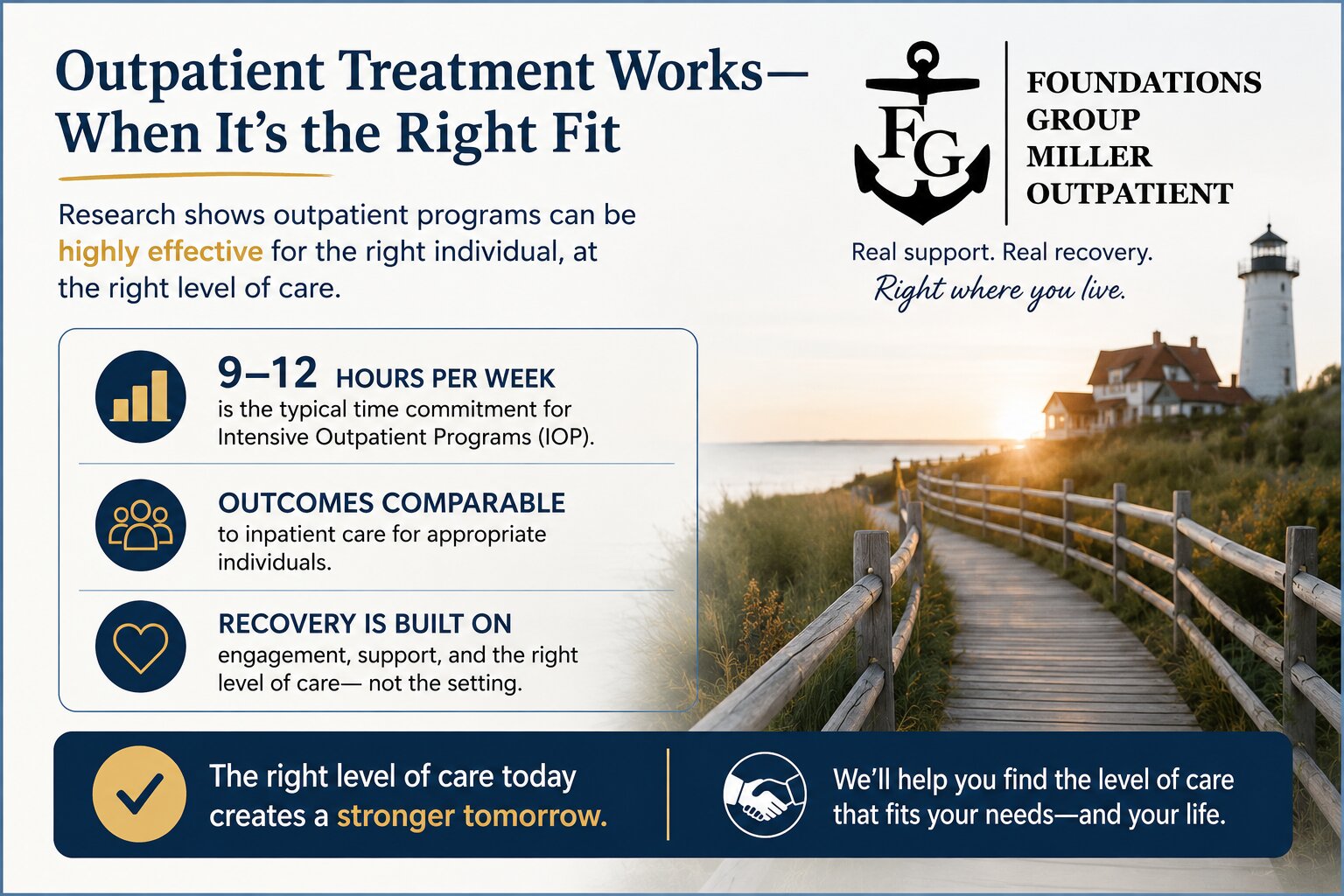
Research consistently shows that outpatient treatment can be highly effective for many people with substance use disorders. However, success depends less on whether treatment happens in a residential setting or an outpatient clinic and more on whether the individual receives the right intensity of care for their situation.
Someone with mild to moderate substance use, a safe place to live, and strong motivation may do very well in outpatient treatment. Someone experiencing severe withdrawal, repeated relapses, or an unsafe home environment may need residential care before transitioning to outpatient services.
The goal is not to choose the “best” program. The goal is to choose the safest and most appropriate one.
What the Evidence Says About Outpatient Treatment
Organizations such as the Substance Abuse and Mental Health Services Administration (SAMHSA) and the National Institute on Drug Abuse (NIDA) emphasize that addiction is a treatable medical condition and that treatment should be individualized.
Research has found that outpatient programs can produce outcomes comparable to inpatient treatment for appropriately selected individuals. Rather than one setting being universally better than another, the evidence points to matching treatment intensity with each person’s clinical needs.
Studies also show that recovery is strengthened by:
- Participating consistently in treatment
- Remaining engaged over time
- Addressing mental health concerns alongside substance use
- Building healthy coping skills
- Continuing care after formal treatment ends
Recovery is not determined by where treatment happens. It is influenced by how actively someone participates and whether the treatment plan addresses the challenges they are actually facing.
What Makes Outpatient Treatment Successful?
Outpatient care provides professional support while allowing people to continue living at home. That flexibility can be a significant advantage—but it also requires personal commitment.
Several factors consistently improve outcomes.
Active Participation
Simply attending appointments is only one part of recovery.
Individuals who participate honestly in counseling, complete therapeutic assignments, practice new coping strategies, and remain engaged between sessions often experience greater progress than those who attend inconsistently.
Completing the Recommended Program
Many people begin feeling better before treatment is complete.
That improvement can create the temptation to stop early.
Continuing through the recommended length of treatment gives people more time to strengthen relapse prevention skills, identify triggers, and build healthier routines before facing challenges independently.
A Stable Living Environment
Recovery becomes much more difficult when someone returns each day to active substance use, violence, instability, or constant conflict.
A safe, supportive home allows people to practice what they learn in treatment while reducing unnecessary stress.
Family and Social Support
Encouragement from trusted family members, partners, or friends often makes recovery easier.
Support does not mean fixing someone’s problems. It means encouraging healthy choices, respecting treatment recommendations, and helping maintain accountability.
Honest Communication
Addiction often grows in secrecy.
Recovery works best when people can honestly discuss cravings, setbacks, stress, and difficult emotions with their treatment team without fear of judgment.
Who Is Most Likely to Benefit From Outpatient Care?
Outpatient treatment is often an excellent option for individuals whose clinical needs can be safely managed without 24-hour supervision.
It may be a good fit for someone who:
- Is seeking treatment for the first time
- Has mild or moderate substance dependence
- Does not require medically supervised withdrawal
- Has reliable transportation to appointments
- Lives in a supportive, substance-free environment
- Wants to continue working, attending school, or caring for family responsibilities
- Is motivated to participate actively in treatment
- Can remain safe between treatment sessions
Many people appreciate that outpatient care allows them to apply new recovery skills immediately in everyday life while still receiving regular professional guidance.
When Someone May Need More Than Outpatient Treatment
Outpatient treatment is not appropriate for every situation.
Beginning with a higher level of care can sometimes improve both safety and long-term recovery.
A clinician may recommend residential addiction treatment near Cape Cod before outpatient care if someone has:
- A history of severe alcohol or benzodiazepine withdrawal
- Previous withdrawal seizures or delirium tremens
- Heavy daily substance use with significant physical dependence
- Multiple unsuccessful attempts in outpatient treatment
- Co-occurring medical or psychiatric conditions requiring close monitoring
- An unstable or unsafe home environment
- Frequent relapse despite previous treatment
- Limited support outside of treatment
Choosing residential treatment first is not a sign that someone has “failed.”
It simply means they need a level of support that better matches the challenges they are facing.
Many individuals move from residential treatment into outpatient care as they become more stable.
Recovery Depends on More Than the Treatment Setting
One common misconception is that one type of treatment guarantees better results than another.
In reality, recovery is influenced by many interconnected factors.
These include:
- Individual motivation
- Quality of therapeutic relationships
- Treatment engagement
- Mental health care
- Family involvement
- Peer support
- Healthy routines
- Long-term recovery planning
- Continuing care after the formal program ends
Recovery is a process rather than a single event.
The most effective treatment plan is one that evolves as a person’s needs change.
Someone may begin in residential treatment, transition into outpatient care, participate in recovery groups, continue therapy, and maintain long-term support for years afterward.
Each stage serves a purpose.
How to Know Which Level of Care Is Right for You
Many people delay treatment because they worry about choosing the wrong program.
Fortunately, that decision does not have to be made alone.
A professional assessment considers factors such as:
- Type of substance being used
- Frequency and amount of use
- Withdrawal risk
- Physical health
- Mental health symptoms
- Previous treatment history
- Home environment
- Family support
- Employment responsibilities
- Personal recovery goals
The purpose of an assessment is not to convince someone to enter a particular program.
It is to recommend the safest and most appropriate level of care based on current clinical needs.
If outpatient treatment is appropriate, it can provide effective care while allowing someone to continue many aspects of daily life. If more support is needed, beginning with a higher level of care can create a stronger foundation for long-term recovery before transitioning to outpatient rehab in Falmouth MA.
Recovery Begins With the Right Level of Support
Choosing treatment is not about proving how strong you are or seeing how little help you can get.
It is about finding the level of care that gives you the best opportunity to recover safely and build lasting change.
Outpatient treatment works—for the right person, at the right time, with the right support system.
If you’re wondering whether it’s the right fit for you, our outpatient addiction treatment on Cape Cod team will give you an honest answer. Call us anytime.
Frequently Asked Questions
Does outpatient treatment work as well as residential treatment?
For many people, yes. Research shows that outpatient care can be highly effective when it matches the individual’s level of need. People with severe withdrawal risks or unstable living situations may benefit from residential treatment first before transitioning to outpatient care.
Can I keep working while attending outpatient treatment?
Often, yes. One of the primary benefits of outpatient care is that many programs are designed to fit around work, school, or family responsibilities while providing structured therapy and recovery support.
How do I know if outpatient treatment is enough?
The best way to determine the appropriate level of care is through a professional clinical assessment. Your treatment team will evaluate your substance use history, withdrawal risk, mental and physical health, support system, and recovery goals before recommending the safest option.