
Realizing you need help for alcohol or drug use can feel overwhelming. Almost immediately, another question follows: What kind of treatment do I actually need?
Many people assume that all addiction treatment looks the same, but there are important differences between outpatient and residential care. Learning about outpatient addiction treatment and how it compares to inpatient treatment can help you make an informed decision based on your needs—not fear or misconceptions.
If you’ve been researching outpatient vs inpatient rehab, the goal isn’t to determine which option is “better.” It’s to understand which level of care offers the safest and most effective path toward recovery.
Both Types of Treatment Share the Same Goal
Whether treatment takes place in a residential facility or through scheduled outpatient visits, the purpose remains the same:
- Help individuals stop using alcohol or drugs safely
- Address the underlying causes of addiction
- Build healthier coping skills
- Reduce the risk of relapse
- Support long-term recovery
Both settings may include individual counseling, group therapy, family involvement, relapse prevention planning, and treatment for co-occurring mental health conditions.
The primary difference is not what treatment is provided.
It is how much support someone needs while receiving it.
What Inpatient (Residential) Treatment Involves
Residential treatment provides around-the-clock care in a structured treatment environment.
Instead of returning home after therapy sessions, individuals live at the treatment facility throughout their stay.
Depending on clinical needs, residential programs commonly last anywhere from 30 to 90 days or longer.
During inpatient treatment, individuals typically receive:
- Twenty-four-hour supervision
- Structured daily schedules
- Individual therapy
- Group counseling
- Medical monitoring when appropriate
- Medication management
- Peer support
- Recovery education
Living away from everyday stressors allows many people to focus entirely on recovery without the distractions or triggers they encounter at home.
For individuals with severe substance use disorders, this level of structure can be an important part of early recovery.
What Outpatient Treatment Looks Like
Outpatient care allows individuals to receive professional treatment while continuing to live at home.
Rather than remaining at a treatment center full time, participants attend scheduled therapy sessions during the week and return home afterward.
Programs vary based on each person’s needs.
Intensive Outpatient Programs (IOP)
Intensive Outpatient Programs often include approximately 9 to 12 hours of treatment each week through:
- Group therapy
- Individual counseling
- Recovery education
- Relapse prevention planning
- Family sessions when appropriate
Many IOP schedules are available during mornings or evenings, allowing participants to continue working or attending school.
Standard Outpatient Care
Traditional outpatient treatment usually involves fewer weekly hours.
Services may include:
- Weekly therapy sessions
- Medication management
- Recovery coaching
- Ongoing treatment planning
This flexibility allows many individuals to balance recovery with work, family, and other responsibilities.
The Biggest Differences Between Outpatient and Inpatient Care
Although both approaches provide evidence-based treatment, they differ in several important ways.
Level of Structure
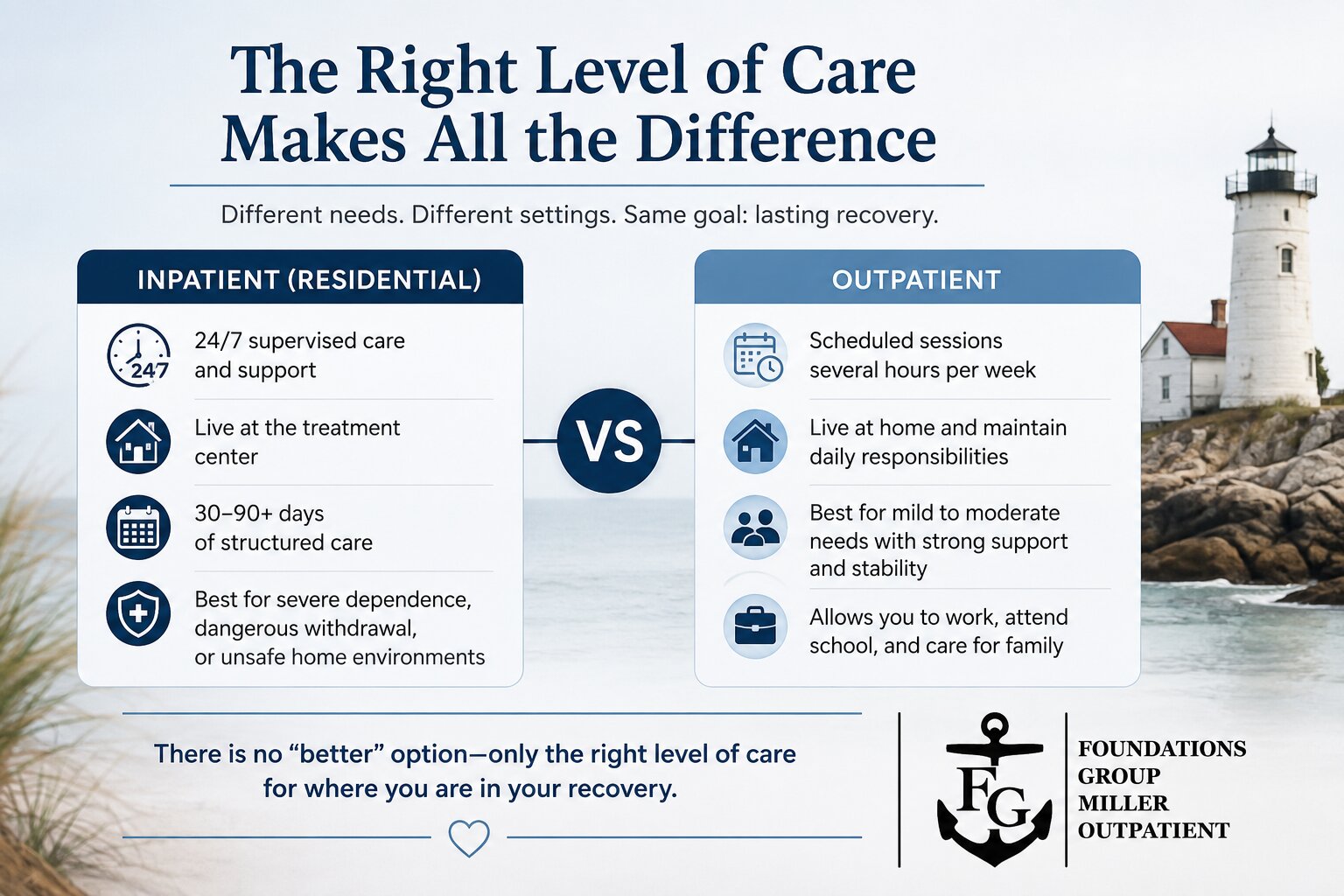
Residential treatment provides continuous supervision and highly structured daily routines.
Outpatient care offers scheduled treatment while requiring individuals to manage recovery independently between appointments.
Living Environment
People in residential treatment live at the facility.
People in outpatient treatment continue living at home.
That difference makes the home environment one of the most important factors when deciding which level of care is appropriate.
Daily Life Responsibilities
Residential treatment temporarily removes individuals from work, school, and many outside responsibilities.
Outpatient care allows many people to continue:
- Working
- Attending school
- Caring for children
- Supporting family members
- Participating in everyday life
Cost Considerations
Because residential treatment includes housing, meals, and continuous supervision, it generally costs more than outpatient treatment.
Insurance coverage varies, but outpatient programs are often more affordable due to their lower level of intensity.
Cost alone, however, should never determine the safest level of care.
Who Is Outpatient Care Best Suited For?
Outpatient treatment works well for many people—but not everyone.
A clinician may recommend outpatient care when someone:
- Has mild or moderate substance dependence
- Does not require medically supervised detoxification
- Lives in a stable, supportive environment
- Has reliable transportation
- Is motivated to participate consistently
- Can remain substance-free between treatment sessions
- Wants to continue working or caring for family responsibilities
Many first-time treatment seekers begin with outpatient care because it provides meaningful clinical support while allowing them to maintain important parts of daily life.
For individuals who qualify, outpatient rehab in Falmouth MA can offer flexibility without sacrificing evidence-based care.
When Outpatient Care Isn’t Enough
One of the most important parts of ethical addiction treatment is recognizing when outpatient care is not the safest option.
Beginning with a higher level of care is sometimes necessary to protect someone’s health.
Residential treatment is often recommended when someone has:
- Severe alcohol dependence
- Benzodiazepine dependence
- A history of withdrawal seizures
- Delirium tremens (DTs)
- Multiple unsuccessful outpatient treatment attempts
- Frequent overdose history
- Serious medical or psychiatric complications
- An unsafe or unstable home environment
- No reliable recovery support
Alcohol and benzodiazepine withdrawal can become life-threatening without medical supervision.
In these situations, clinicians often recommend residential addiction treatment near Cape Cod before transitioning into outpatient care once the individual is medically stable.
Choosing inpatient care first is not a setback.
It is simply receiving the level of support that best matches the current situation.
How Clinicians Decide Which Level of Care Is Appropriate
Many people assume they have to choose their treatment program before speaking with anyone.
Fortunately, that’s not how the process usually works.
A comprehensive assessment evaluates factors including:
- Substance use history
- Withdrawal risk
- Physical health
- Mental health conditions
- Previous treatment experiences
- Living environment
- Family support
- Employment responsibilities
- Recovery goals
Rather than recommending the same program for everyone, clinicians match treatment intensity to each person’s needs.
That individualized approach improves both safety and long-term recovery.
There Is No “Better” Treatment—Only the Right Level of Care
Comparing outpatient and inpatient treatment can make it seem like one option is stronger than the other.
In reality, they serve different purposes.
Some people begin recovery in residential treatment before stepping down to outpatient care.
Others safely begin and complete treatment entirely through outpatient services.
Neither path is more successful simply because of where treatment occurs.
The best treatment is the one that gives you the support you need today while preparing you for lasting recovery tomorrow.
If you’re weighing your options and think outpatient might be the right fit, we’re here to talk it through. Our outpatient addiction treatment on Cape Cod team can help you figure out what level of care you actually need. Call (774) 252-6966 today to speak with a member of our team.
Frequently Asked Questions
What is the biggest difference between outpatient and inpatient treatment?
The primary difference is the level of supervision. Residential treatment provides 24-hour care in a live-in setting, while outpatient treatment allows individuals to live at home and attend scheduled therapy sessions.
Can outpatient treatment be as effective as inpatient care?
Yes, for individuals whose clinical needs match outpatient care. Research shows that outpatient treatment can be highly effective for appropriate candidates when they actively participate and complete their recommended program.
How do I know which level of care I need?
A professional assessment is the best way to determine the appropriate level of care. Clinicians consider withdrawal risk, substance use severity, mental and physical health, home environment, and recovery support before making a recommendation.