
I used to be the person people pointed to as proof recovery worked.
I had the milestones. The sober anniversaries. The “you look amazing” comments. I knew how to sound okay in meetings, how to encourage newer people, how to laugh off questions when I was struggling. From the outside, I looked solid.
But somewhere along the way, I stopped being honest.
Not all at once. Quietly.
I started cancelling plans because I was exhausted all the time. I stopped answering certain texts. My anxiety got louder, but I kept telling myself I should be able to handle it by now. I’d worked too hard to admit I was slipping again.
Then I relapsed.
And honestly? The relapse itself wasn’t even the worst part.
The worst part was waking up afterward feeling like I had destroyed the version of myself everyone trusted. Including me.
That shame can make people disappear. It can convince you to isolate, lie, or try to “fix it alone” before anyone notices. But eventually, I realized I needed more than a few meetings and another promise to myself.
That’s what led me back to structured daytime treatment support.
And if you’re reading this because part of you is quietly unraveling too, I want you to know something I couldn’t hear at first:
Going back for help is not proof you failed.
Sometimes it’s proof you finally stopped pretending.
I Didn’t Relapse Overnight
People talk about relapse like it’s one moment.
For me, it was a hundred small moments.
It was telling people I was “just tired.”
It was avoiding conversations that required honesty.
It was letting stress pile up until I couldn’t tell the difference between burnout and emotional collapse.
I stopped doing the things that made me feel connected to myself. Sleep got worse. My thoughts got darker. I became emotionally numb in ways that scared me, but I kept functioning just enough to convince myself I was okay.
That’s the tricky part about relapse after sober time.
You can still go to work.
Still answer emails.
Still smile at people.
Still look “fine.”
Meanwhile, your internal world feels like a room slowly filling with smoke.
At some point, I realized I wasn’t really living anymore. I was managing appearances.
The Shame of Coming Back Felt Crushing
Walking back into treatment after relapse felt humiliating at first.
I kept thinking:
“They’re going to wonder what happened.”
“They’ll think I didn’t learn anything.”
“I’m too old to still be struggling like this.”
There’s a specific kind of pain that comes with needing support again after people celebrated your progress. Especially after you celebrated it too.
But here’s what nobody tells you:
Relapse often hurts because recovery mattered to you.
People who genuinely don’t care rarely carry that kind of shame.
The truth is, many alumni struggle after long periods of sobriety. Stress changes. Trauma resurfaces. Mental health symptoms intensify. Life becomes complicated in ways recovery quotes can’t always solve.
And sometimes the strongest thing you can do is admit your current support system isn’t enough anymore.
I Thought Needing More Structure Meant I Was Weak
I resisted daytime treatment for weeks because I thought needing that level of care meant I was “back at square one.”
I couldn’t stop comparing myself to who I used to be.
But healing doesn’t move in straight lines.
If someone reinjures their back after physical therapy, nobody says:
“Well, I guess the first treatment didn’t count.”
Recovery deserves that same compassion.
A lot of people searching online end up comparing levels of care because they’re trying to figure out what fits real life. Discussions around PHP vs IOP can sound overly clinical, but the actual emotional question underneath it is usually much more human:
“How much help do I need right now without losing everything I’ve built?”
That’s a vulnerable question.
Especially for people trying to hold onto jobs, relationships, parenting responsibilities, or simply their dignity while also admitting they’re struggling.
I Needed More Than Motivation
This was hard for me to accept.
I kept waiting for motivation to magically come back.
I downloaded recovery podcasts. Bought journals. Promised myself fresh starts every Monday morning. I kept trying to “mindset” my way out of emotional exhaustion.
But eventually, I had to admit something uncomfortable:
I didn’t need better intentions.
I needed better support.
There’s a difference.
Sometimes relapse isn’t about not caring enough. Sometimes your nervous system is overloaded, your mental health is deteriorating, and your coping skills no longer match the amount of pain you’re carrying.
That was true for me.
Having multiple days a week of structured support helped interrupt the chaos in my head. It gave me accountability, consistency, therapy, and actual human connection during a time when isolation felt safer.
And honestly? It also gave me permission to stop pretending for a while.
Keeping My Job Made the Decision More Complicated
One of my biggest fears was losing the life I’d rebuilt.
I worried treatment would mean disappearing completely from work and responsibilities. I imagined worst-case scenarios constantly. Financial stress made everything heavier.
That fear keeps a lot of people stuck longer than they realize.
Especially high-functioning alumni.
The people who are struggling internally while still managing to show up externally often convince themselves they’re “not bad enough” for additional support. But pain doesn’t become less real just because you’re still productive.
You can still be employed and deeply overwhelmed.
You can still look successful while quietly falling apart.
Finding care that provides significant support while still allowing some connection to daily life can make recovery feel more possible for people who are terrified of losing momentum altogether.
For me, that middle ground mattered.
The Second Time Felt Different
The first time I got sober, I mostly wanted my old life back.
The second time, I wanted peace.
That changed how I approached everything.
I stopped trying to perform recovery perfectly. I stopped caring so much about whether people viewed me as “successful.” I started focusing on smaller, more honest things:
Was I sleeping?
Was I isolating?
Was I telling the truth?
Did I feel emotionally connected to anyone?
Was I actually okay—or just convincing people I was?
That kind of honesty is uncomfortable. But it’s also where healing starts becoming real.
One of the most powerful things someone told me during treatment was:
“You don’t have to earn the right to come back.”
I carried that sentence around for weeks.
Because shame tells people they need to get worse before they deserve help again.
That simply isn’t true.
Recovery After Relapse Can Still Be Real
There’s this myth that relapse erases everything good that came before it.
It doesn’t.
The sober time mattered.
The lessons mattered.
The healing mattered.
Even if you stumbled afterward.
In some ways, coming back after relapse requires a deeper kind of courage because now you know recovery isn’t about becoming magically immune to pain. It’s about learning how to return to yourself faster instead of disappearing completely.
That’s a harder lesson. But it’s often a more honest one.
And strangely enough, the second chapter of recovery can become less performative and more grounded because you stop chasing perfection.
You start chasing honesty instead.
If You’re Reading This and Hiding Again
Maybe nobody knows how bad things have gotten.
Maybe you’re functioning just enough to avoid concern.
Maybe part of you keeps saying:
“I should be able to fix this myself.”
I understand that voice.
But needing support again does not make you weak, dramatic, broken, or hopeless. It makes you human.
A lot of alumni quietly struggle after periods of stability because recovery doesn’t freeze life in place. New stressors appear. Anxiety changes shape. Burnout builds slowly. Old coping patterns sneak back in when emotional exhaustion goes untreated.
You do not have to wait until everything explodes to ask for help.
And you do not need to prove your suffering before you deserve support.
If you’ve been trying to figure out whether you need more structure, accountability, or daytime support while still balancing work and responsibilities, exploring options like day treatment services can help you reconnect before things spiral further.
Frequently Asked Questions
Is relapse after long-term sobriety common?
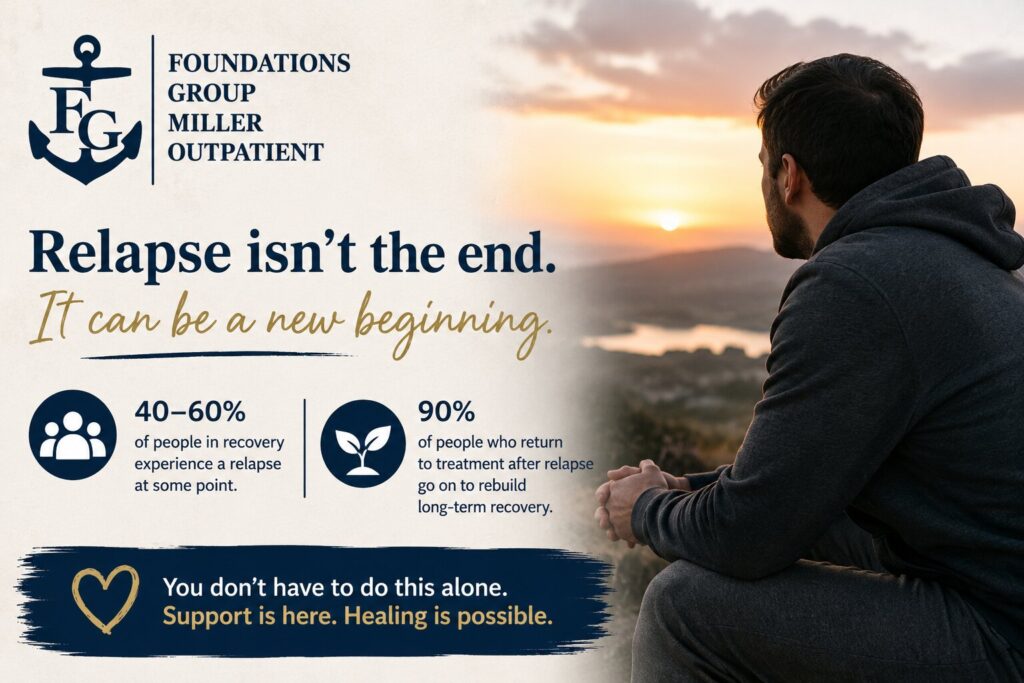
Yes. Relapse can happen at any stage of recovery, including after months or years of sobriety. It doesn’t mean treatment failed or that recovery is impossible. Many people return to treatment after relapse and build even stronger long-term recovery afterward.
How do I know if I need more support again?
If you’re isolating, emotionally overwhelmed, struggling to function, thinking about using constantly, or feeling unable to stabilize on your own, it may be time to consider additional support. You don’t have to wait for a crisis to ask for help.
What if I feel embarrassed about going back to treatment?
That feeling is incredibly common. Many alumni worry they’ll be judged or seen as failures. In reality, returning for help often shows self-awareness and courage—not weakness.
Can I still work while attending daytime treatment?
For some people, yes. Treatment schedules vary, and many individuals seek structured care specifically because they need significant support while still managing parts of daily life and responsibilities.
Is needing a higher level of care a bad sign?
Not necessarily. Mental health, stress, trauma, and recovery needs can change over time. Sometimes people simply need more support during difficult periods. That doesn’t erase previous progress.
What’s the difference between PHP vs IOP?
While both provide structured support, the biggest difference is usually the intensity and frequency of care. People exploring PHP vs IOP are often trying to determine how much structure, therapy, and support they need during a difficult season of recovery or mental health challenges.
What if I left treatment before and stopped showing up?
You are still allowed to come back.
A lot of people pause treatment, disappear for a while, or relapse before returning. Shame convinces people the door is closed when it usually isn’t.
Call (774) 252-6966 or visit our Day treatment program services to learn more about our Day treatment program services in your area.