

You don’t want to disappear from your life.
You just don’t want to keep living it like this.
That quiet tension—something needs to change, but I can’t drop everything—is where a lot of people get stuck.
If you’ve been trying to figure out what getting real support actually looks like day-to-day, you can start here: structured daytime care that works with your life.
Step 1: Stop Assuming Help Requires You to Vanish
This is the first mental barrier—and it’s a big one.
Most people imagine treatment as something extreme. You leave your responsibilities, step out of your routine, and everything pauses.
That’s not the only path.
Structured daytime care exists specifically for people who don’t want to disappear. People who still care about their work, their relationships, their daily rhythm—but know something underneath needs attention.
You don’t have to burn your life down to rebuild it.
Sometimes you just need support woven into it.
Step 2: Get Honest About What’s Not Working Anymore
Before anything changes, there’s usually a moment of clarity.
It might sound like:
- “I can’t keep doing this at this pace.”
- “I’m managing… but barely.”
- “I feel off, and I don’t know how to fix it.”
If you’re here, you’ve probably already had that moment.
And if weekly support or trying to handle it solo hasn’t been enough, that doesn’t mean you failed—it means your needs have shifted.
That’s allowed.
Step 3: Understand What a Day Actually Feels Like
Let’s strip away the clinical language.
A day in structured care isn’t about being analyzed or judged. It’s about being supported in real time, while things are happening—not days later when the moment has passed.
Your day might include:
- A morning check-in that grounds you before everything spirals
- Conversations that feel surprisingly relatable
- Learning tools—and then actually practicing them that same day
- Breaks that give your brain space to breathe instead of constantly pushing
It’s structured, yes. But not rigid.
There’s rhythm to it. Flow. Space.
And for a lot of people, it’s the first time their day feels held together instead of constantly slipping.
Step 4: Know the Time Commitment Without Letting It Scare You
This is the question most people are quietly asking:
“How much of my day will this take?”
It’s a fair concern.
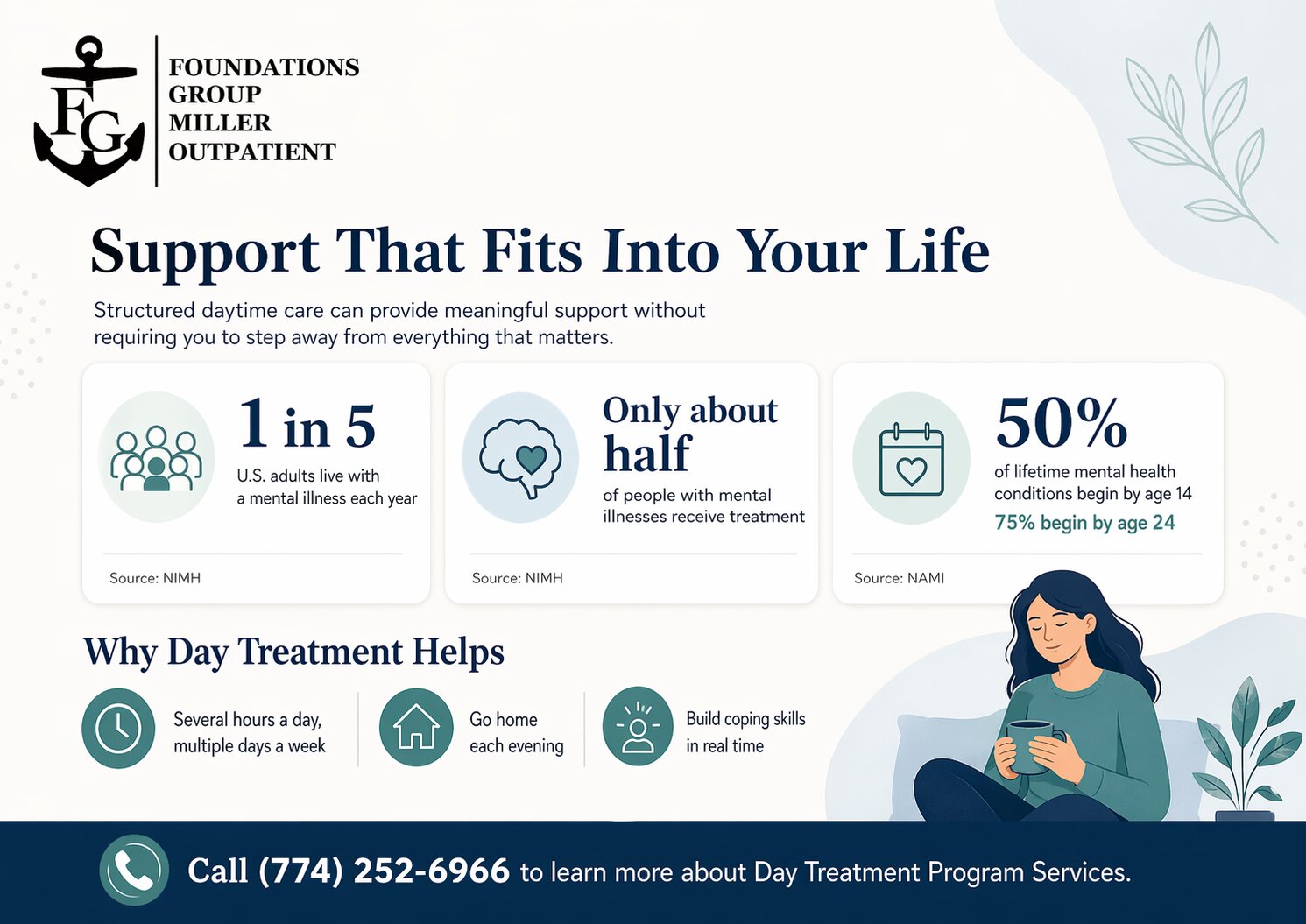
Most programs run for several hours a day, multiple days a week. If you’ve been searching PHP hours per day, you’re likely trying to figure out if it’s realistic.
Here’s the honest answer:
It’s a meaningful part of your day—but not your entire life.
You still go home.
You still sleep in your own bed.
You still stay connected to what matters to you.
You’re just not carrying everything alone during those hours anymore.
And that shift? It’s bigger than it sounds.
Step 5: See How It Actually Eases Your Life (Not Complicates It)
At first glance, it can feel like you’re adding something to your schedule.
But what most people notice is the opposite.
Things start to feel lighter.
Because instead of:
- Bottling everything up until the end of the day
- Trying to push through stress without support
- Constantly resetting emotionally
You’re processing things as they happen.
That changes everything.
Work doesn’t feel as overwhelming. Evenings don’t feel like recovery mode. Your mind isn’t constantly racing to catch up.
You’re not adding pressure.
You’re redistributing it.
Step 6: Expect Resistance—And Don’t Let It Decide for You
This part matters more than most people expect.
You might feel hesitation. Doubt. Even a strong urge to put it off.
That doesn’t mean it’s wrong.
It means it’s different.
If you’re used to handling everything on your own, stepping into consistent support can feel unfamiliar—even uncomfortable at first.
But discomfort isn’t danger.
It’s often the beginning of something changing.
Step 7: Focus on What You’re Moving Toward
It’s easy to focus on what you might have to adjust—your schedule, your routine, your time.
But the real question is:
What do you gain?
- A clearer head instead of constant noise
- Emotional steadiness instead of unpredictable swings
- Support that shows up during your week, not just after it overwhelms you
- A sense that you’re not doing this alone anymore
That’s not small.
That’s foundational.
Step 8: Take One Step—Not the Whole Leap
You don’t have to commit to everything right now.
You don’t need to be fully certain.
You don’t even need to feel ready.
You just need to be willing to ask, “What would this look like for me?”
That’s it.
A conversation. A question. A small step toward something that might actually help.
The Shift Most People Don’t Expect
People come in thinking they’re giving something up.
Time. Freedom. Flexibility.
But what they often find is the opposite.
They gain space in their mind.
Relief in their body.
Support in the middle of their day instead of at the edges of it.
It’s like finally putting weight down that you didn’t realize you were carrying every hour.
You Don’t Have to Choose Between Help and Your Life
That’s the myth that keeps people stuck.
That getting help means stepping away from everything that matters.
It doesn’t.
You can stay in your life—and still get real, consistent support inside it.
If you’ve been wondering what that could look like, you can explore treatment options in your area through this day treatment program.
FAQ: What People Really Want to Know Before Starting
Will I have to stop working or leave my responsibilities?
Not necessarily. Many people adjust their schedules, but structured daytime care is designed to work alongside your life—not replace it entirely.
How many hours a day does it usually take?
Programs typically run for several hours a day, multiple days a week. It’s enough time to provide real support without taking over your entire routine.
What if I’m not sure I “need” this level of help?
You don’t have to hit a breaking point to deserve support. If what you’re doing now isn’t enough, that’s already a valid reason to explore something different.
Will I feel out of place if I’m not in crisis?
No. Many people in these programs are functioning in their daily lives—they’re just tired of doing it without enough support.
What does a normal day feel like emotionally?
Most people describe it as grounding. You’re not alone in your thoughts, and you’re not rushing through everything. There’s space to actually process and breathe.
What if I start and it feels like too much?
That’s something you can talk through and adjust. The goal isn’t to overwhelm you—it’s to support you in a way that feels sustainable.
You’re Allowed to Want More Support
You don’t have to wait until things fall apart.
You don’t have to prove how much you’re struggling.
And you don’t have to choose between your life and your mental health.
There’s a way to hold both.
Call (774) 252-6966 or visit Day treatment program services to learn more about our Day treatment program services in Massachusetts.