

I didn’t plan to stop going. It just… happened. One missed day turned into a quiet exit, and then silence.
If you’re here, there’s a chance you know that feeling too—the awkward distance that grows after you’ve stepped away from something that was supposed to help.
I found my way back through structured daytime support that didn’t overwhelm me. Not perfectly. Not all at once. But enough to start again.
The Quiet Slide Out of Treatment
No one really talks about how easy it is to drift away.
There wasn’t a big moment where I decided, “I’m done.”
It was more like:
- “I’ll skip today, I’m too drained.”
- “I’ll go back tomorrow.”
- “They probably noticed I missed a few days…”
- “It’s going to be awkward now.”
And then suddenly, I was gone.
That’s the part that sticks with you—the silence after. Not just from them, but from yourself.
Why Leaving Didn’t Mean I Didn’t Care
For a while, I told myself I just wasn’t committed enough. That I didn’t want it badly enough.
But that wasn’t the truth.
The truth was: I was overwhelmed.
Trying to manage my mental health while also showing up for full days of treatment felt like trying to sprint with a weight on my chest. I didn’t have the energy for both.
So I did what a lot of people do when something feels too heavy—I avoided it.
Not because I didn’t need help.
Because I didn’t know how to keep going without burning out.
The Shame That Keeps You Stuck
Once you’ve stepped away, something else creeps in: shame.
It sounds like this:
- “You already quit once.”
- “They’re going to ask where you’ve been.”
- “You should’ve handled this better.”
Shame doesn’t just make you feel bad. It convinces you that going back isn’t an option.
But here’s what I didn’t realize at the time: treatment spaces see this all the time. People leave. People come back. It’s not unusual—it’s human.
The door doesn’t close just because you paused.
What Changed: Finding Something I Could Actually Handle
The turning point for me wasn’t motivation. It was finding something that felt possible.
That’s where half-day outpatient care came in.
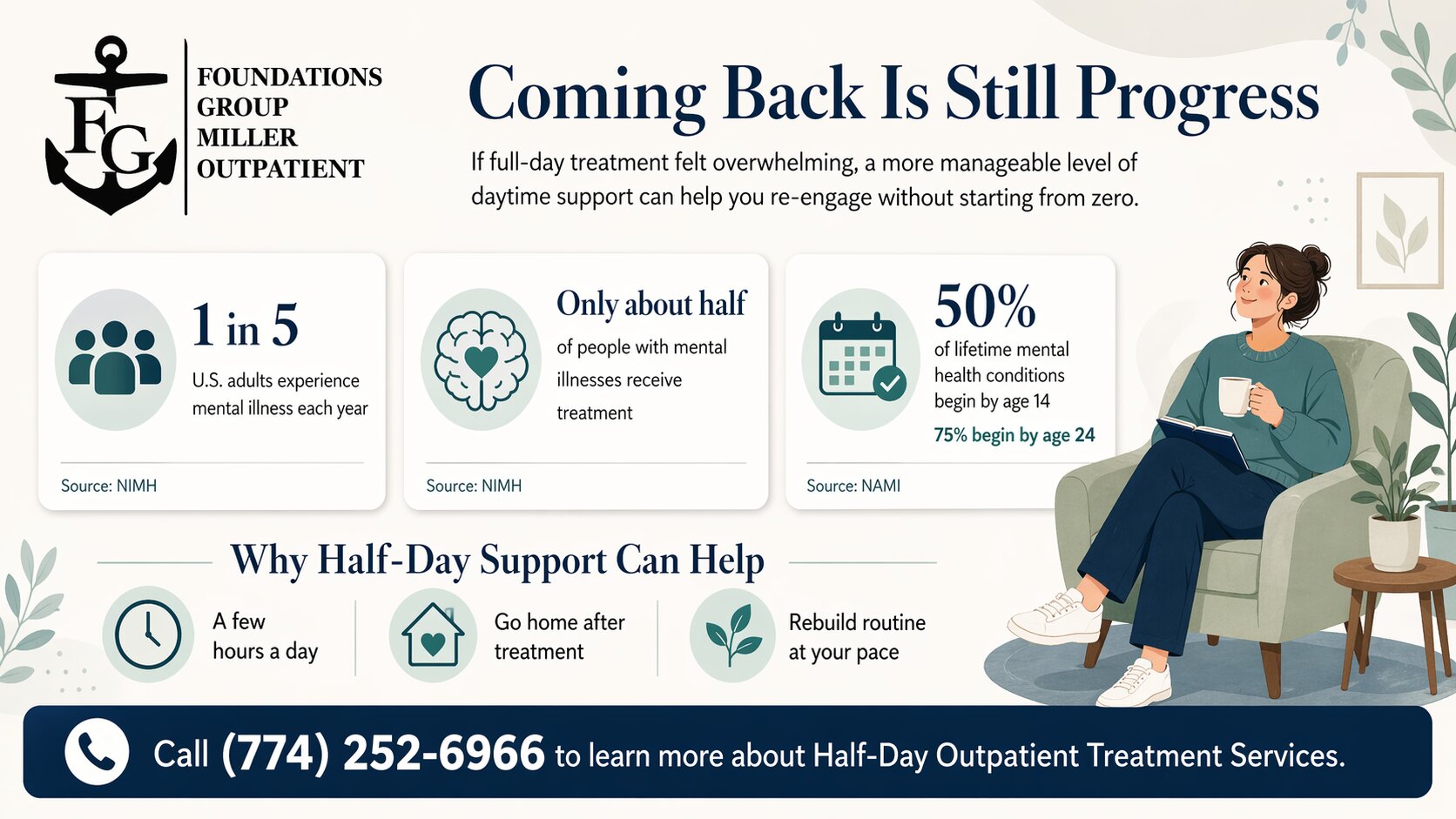
Instead of committing to a full day that felt overwhelming, I could show up for a few hours. That shift mattered more than I expected.
It felt like this:
- I didn’t have to push myself past my limit
- I could focus without shutting down
- I still had time to rest or handle life outside
It gave me structure—but not pressure.
If you’ve ever searched something like PHP mental health near me, you’re probably not looking for “more intensity.” You’re looking for something that actually fits your capacity right now.
How I Actually Went Back (Step by Step)
I wish I could say I walked in confident and ready. I didn’t.
Here’s what it really looked like:
1. I lowered the bar—completely
I stopped thinking about “sticking with it” long-term.
I focused on one thing: Can I show up today?
That was it.
2. I accepted it would feel uncomfortable
Walking back in felt awkward. I won’t pretend it didn’t.
But awkward doesn’t mean wrong. It just means you’re doing something new again.
3. I didn’t over-explain
I thought I’d need to justify everything—why I left, what happened.
I didn’t.
Most of the time, people just want to help you pick up where you are.
4. I let consistency come later
At first, it wasn’t about perfect attendance.
It was about rebuilding the habit of showing up—even inconsistently.
Consistency came after I felt safe enough to keep going.
The Difference Between “Too Much” and “Just Enough”
One of the biggest things I learned is this:
Not all support works the same for every moment of your life.
Sometimes full-day care is exactly what someone needs.
Sometimes it’s too much—and that doesn’t mean you’re failing.
Half-day treatment sat in that middle space:
- More support than trying to manage everything alone
- Less overwhelming than being in treatment all day
That middle ground is where I started to feel steady again.
Like I could breathe.
The Small Wins That Started to Add Up
It didn’t happen overnight.
But slowly, things shifted:
- I stopped dreading the next day as much
- I could stay present longer during sessions
- I started using what I learned outside of treatment
And maybe the most important part:
I started trusting myself again.
Not in a big, dramatic way. Just in small moments where I followed through.
That’s how it builds.
If You’re Thinking About Going Back
You don’t need to wait until you feel ready.
Honestly, “ready” is overrated.
What matters more is this:
Is there a part of you that still wants things to feel different?
If the answer is yes—even a little—that’s enough.
That’s something to listen to.
You don’t have to jump back into the exact same structure that didn’t work before. You’re allowed to find a version of support that meets you where you are now.
Quick Ways to Make Returning Feel More Manageable
- Start with one day instead of a full plan
- Remind yourself: leaving didn’t cancel your chance to come back
- Expect discomfort—it fades faster than you think
- Focus on showing up, not doing it perfectly
- Let the structure support you instead of trying to control everything
FAQ: Coming Back After Dropping Out of Treatment
Is it normal to stop going to treatment and then come back?
Yes. It happens more often than people admit. Treatment isn’t always a straight line, and stepping away doesn’t mean you can’t return.
Will they judge me for leaving?
Most programs are used to people coming and going. Their focus is helping you re-engage, not questioning why you stepped away.
What if I don’t feel ready yet?
You don’t need to feel fully ready. Showing up while unsure is still progress. Readiness often comes after you start again.
How do I know if a shorter program is better for me?
If full days felt overwhelming or unsustainable before, a shorter, structured option might be easier to stick with while still giving you support.
Can I really make progress if I’m only going part of the day?
Yes. Progress isn’t about how many hours you spend—it’s about what you can actually absorb and apply. Sometimes less time, done consistently, works better.
What if I leave again?
Then you come back again.
Seriously.
Stopping and restarting doesn’t erase your progress. It just means you’re still figuring out what works—and that’s part of the process.
You’re Not Starting Over—You’re Starting From Experience
That’s something I didn’t understand before.
Coming back isn’t going back to zero. You’re returning with more awareness—of what felt like too much, what didn’t fit, and what you might need instead.
If you’re ready to explore something more manageable, you can look into treatment options in your area through this half-day outpatient program.
You don’t have to figure this out on your own. Call (774) 252-6966 or visit half-day outpatient treatment services to learn more about our half-day outpatient treatment services in Massachusetts.