
Sometimes the hardest sentence to say is also the simplest.
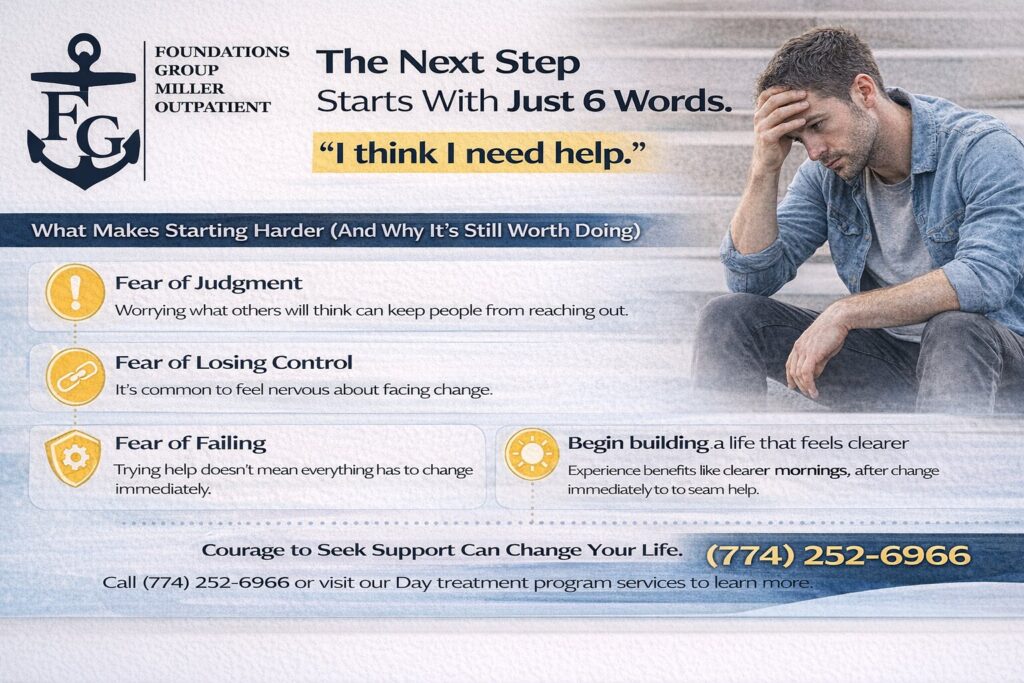
“I think I need help.”
For many people, that realization doesn’t arrive with drama or crisis. It arrives in quiet moments—late at night, after another exhausting day, or during a conversation where you realize you’re pretending everything is fine.
You know something has to change.
But knowing that and actually taking the next step are two very different things.
For some people, that next step might involve exploring structured daytime care—a level of support that allows you to focus on recovery while still staying connected to your life.
If you’re reading this, you might already be closer to change than you think.
The Moment People Realize They Can’t Keep Going Like This
Most people don’t wake up one morning suddenly ready for treatment.
Instead, the realization grows slowly.
Maybe it starts with small signs:
You’re more tired than usual.
You’re struggling to focus at work.
Relationships feel strained.
You promise yourself things will be different tomorrow.
Then tomorrow comes.
And nothing really changes.
Eventually, a thought appears that’s difficult to ignore:
“I can’t keep living like this.”
That moment can feel both frightening and clarifying at the same time. It’s the point where denial starts losing its grip and honesty begins to take its place.
Recognizing the need for help doesn’t mean you’ve failed.
It means you’re paying attention.
Why Even Strong People Avoid the Next Step
Here’s something important to understand: avoidance doesn’t mean you don’t want recovery.
In fact, the people who hesitate the most are often the ones who care deeply about getting better.
Fear shows up in many forms:
- fear of judgment
- fear of losing control
- fear of disappointing people
- fear that nothing will actually change
- fear of facing emotions you’ve been avoiding
It’s a strange paradox.
You want things to improve—but the idea of taking action feels overwhelming.
Many people imagine treatment as something extreme or life-disrupting. They picture disappearing from their normal routines or putting everything on hold.
That image alone can keep someone stuck for months or even years.
You Don’t Have to Disappear From Your Life to Start Healing
One of the most common surprises for first-time treatment seekers is learning that recovery support doesn’t always require stepping away from everything.
Some people benefit from live-in environments with round-the-clock support. But others need something that fits into their daily lives.
That’s where structured daytime care comes in.
This type of support creates a focused space during the day for therapy, guidance, and recovery work—while allowing you to remain connected to your home environment and responsibilities.
It’s not about disappearing from your life.
It’s about giving yourself the time and structure to rebuild it.
For many people, that balance is exactly what makes the idea of treatment feel possible.
What People Are Often Afraid Will Happen
Before starting treatment, it’s common to imagine the worst.
People often worry about things like:
“What if everyone judges me?”
Most people entering treatment feel the same fear. The reality is that many individuals there are experiencing the same uncertainty you are.
“What if it doesn’t work?”
This fear is deeply human. But staying stuck rarely improves things either. Treatment creates an opportunity to try something different.
“What if I’m not bad enough?”
This is one of the most common thoughts. Many people compare themselves to extreme stories and convince themselves they don’t qualify for help.
But needing support isn’t a competition.
If something in your life feels unmanageable, that’s reason enough to explore help.
The First Few Days Are Often the Hardest
The beginning of treatment can feel emotionally intense.
You’re stepping into unfamiliar territory. You may be talking about things you’ve avoided for a long time.
But something important often happens during those early days.
People realize they’re not alone.
They meet others who have similar fears, struggles, and hopes. They hear stories that feel strangely familiar.
And that sense of isolation—the feeling that you’re the only one going through this—starts to soften.
Recovery becomes less about surviving alone and more about rebuilding with support.
Sometimes that shift alone can feel like a breath of fresh air.
Healing Doesn’t Happen All at Once
One of the biggest misconceptions about treatment is that it produces instant transformation.
Real recovery doesn’t work that way.
It happens through small changes that build over time.
A new insight during therapy.
A conversation that helps you understand your patterns.
Learning how to respond differently to stress.
Discovering healthier ways to cope with emotions.
At first, those shifts may seem small.
But over weeks and months, they begin to change how you experience your life.
Recovery is less like flipping a switch and more like learning to steer a ship.
The direction changes gradually—but the destination eventually looks very different.
The Step You’re Avoiding Might Be the Turning Point
Many people delay treatment because they believe they need to feel “ready.”
The truth is that readiness often grows after you begin.
It’s normal to feel unsure.
It’s normal to feel scared.
And it’s normal to wonder whether this step will really make a difference.
But we’ve seen something again and again.
The moment someone allows themselves to explore help—even just by making a call or asking questions—something shifts.
Hope starts to feel a little more real.
A day treatment program can create a structured space where healing begins to feel manageable instead of overwhelming.
Not because everything changes overnight.
But because you’re finally moving forward.
FAQ: Questions Many First-Time Treatment Seekers Ask
How do I know if I really need treatment?
If you’re questioning whether your mental health or substance use is affecting your life, that’s already an important signal. Treatment isn’t only for people in crisis. Many people seek help when they notice their coping strategies are no longer working.
What if I’m scared to start treatment?
Feeling scared is completely normal. Many people feel anxious before starting because it involves stepping into the unknown. Once people begin, they often realize the environment is far more supportive and understanding than they expected.
Will treatment take over my entire life?
Different levels of care exist for different needs. Some programs allow people to receive structured support during the day while still returning home afterward. This balance can make treatment feel more manageable for people who want to stay connected to their daily responsibilities.
What if I try treatment and it doesn’t work?
Recovery rarely follows a perfect path. Trying treatment doesn’t mean everything must change immediately. It simply means you’re exploring a new approach with professional support and guidance.
Is it too early for me to get help?
Many people worry they are seeking help “too soon.” In reality, early support can prevent problems from becoming more severe. You don’t have to wait for things to get worse before reaching out.
What happens if I decide to ask for help?
Often, the first step is simply a conversation. Treatment providers can help you understand your options and determine what type of support might fit your situation. You’re not committing to anything just by asking questions.
Recognizing that you need help takes courage.
Taking the next step takes even more.
But you don’t have to do it alone.
Call (774) 252-6966 or visit our Day treatment program services to learn more about our Day treatment program services in Cape Cod, MA.