
I used to believe something that many long-term alumni quietly believe.
If you go back to treatment, it must mean something went wrong.
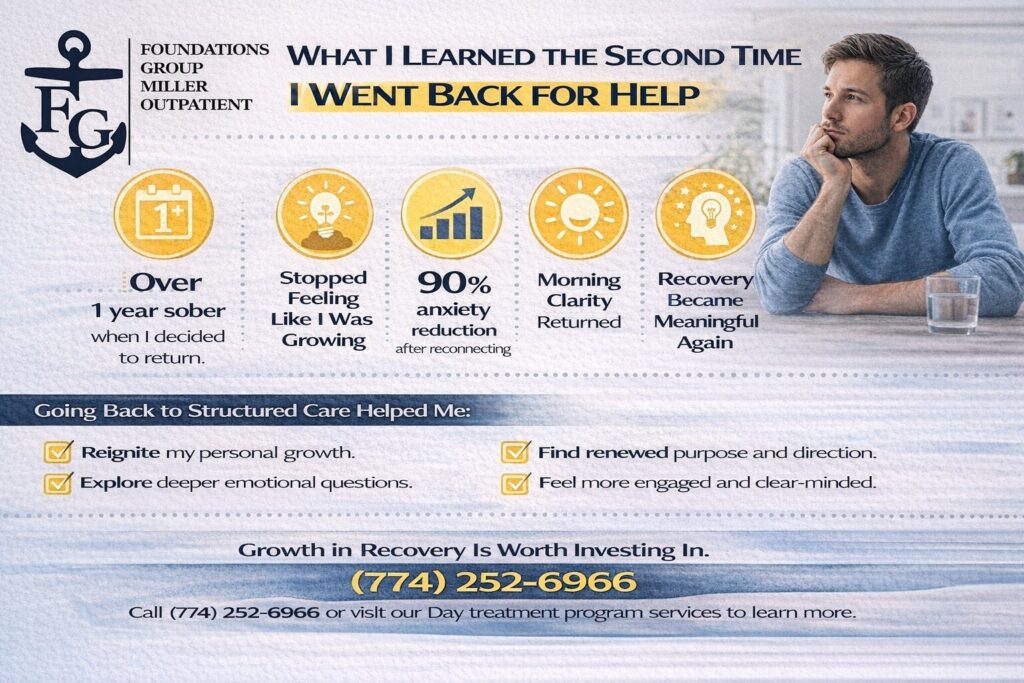
I had over a year sober. My life looked stable. I had routines, responsibilities, and people who trusted me again. From the outside, everything seemed fine.
But inside? Something had gone quiet.
I remember scrolling through a page about structured daytime care and thinking, “That’s not for me anymore.”
A few months later, I realized I had been wrong.
Not because I relapsed.
Because I had stopped growing.
The Quiet Plateau Nobody Warns You About
Early recovery is loud.
Every emotion feels intense. Every decision matters. You celebrate small wins like sleeping through the night or making it through a weekend without using.
But long-term sobriety can bring a different challenge.
Things stabilize.
Life becomes normal again.
And while that’s a gift, it can also create a strange kind of stillness.
You wake up, go to work, attend the occasional meeting, and do what you’re supposed to do. Yet somewhere inside, a quiet question starts forming.
Is this it?
It’s not despair.
It’s not relapse.
It’s more like emotional static—just enough disconnection to make things feel flat.
Many people in long-term recovery experience this phase. The problem is, almost nobody talks about it.
The Lie I Believed About Going Back for More Help
For a long time, I had a rule in my head.
Treatment was something you “graduate” from.
Once you finish a program and build your life again, the idea of stepping back into structured care can feel like going backward.
I told myself things like:
- “I already did that.”
- “Other people need those spots more than I do.”
- “If I go back, people will think I’m struggling.”
But the truth was simpler.
I wasn’t struggling with sobriety.
I was struggling with stagnation.
And stagnation can be just as dangerous as chaos.
Long-Term Sobriety Has Its Own Set of Challenges
Recovery changes as the years go on.
The problems that dominate the first year often fade. Cravings may become less intense. Daily stability returns.
But new challenges show up.
You start asking deeper questions:
- Who am I now that I’m sober?
- What do I want my life to look like?
- Why do I still feel disconnected sometimes?
- Why does motivation feel harder to access?
These aren’t beginner questions.
They’re long-term recovery questions.
And sometimes they require deeper support than occasional meetings or self-reflection.
That’s where programs designed for structured daytime care can help people re-engage with the work of recovery without turning their entire lives upside down.
Walking Back Into a Program Felt Strange
The first day I walked into a day treatment program, I felt like I didn’t belong.
Part of me expected everyone to be in early recovery, desperate, or newly sober.
Instead, I met people in all different stages of their journey.
Some were just starting.
Some were returning after setbacks.
Some, like me, were years sober but feeling emotionally stuck.
And something surprising happened during those first few days.
The conversations went deeper than anything I’d had in a long time.
Instead of repeating the same early-recovery topics, people talked about:
- rebuilding identity
- dealing with emotional numbness
- navigating relationships after years of sobriety
- rediscovering purpose
It felt less like starting over and more like reopening a chapter I had left unfinished.
The Moment I Realized Something Was Changing
About a week in, I noticed a shift.
My thinking felt clearer.
I started journaling again. I began questioning old patterns that had quietly stayed in my life long after I stopped using.
For the first time in a while, recovery felt active again.
It wasn’t about avoiding relapse.
It was about building a life that actually felt meaningful.
That shift reminded me of something important:
Sobriety keeps you safe.
Growth is what makes recovery fulfilling.
Why Structure Still Matters — Even Years Later
One of the biggest surprises was how powerful structure still felt.
When you’re early in recovery, structure protects you from chaos. Schedules, groups, and accountability create stability.
But even years later, structured support can serve a different purpose.
It creates space to focus.
Without constant work obligations or daily distractions, you can slow down enough to examine parts of life that have been quietly building pressure.
Things like:
- unresolved emotional patterns
- stress that builds over time
- relationship dynamics that remain complicated
- personal goals that got buried during survival mode
A day treatment program gives people room to work through those layers without stepping away from life completely.
You still sleep in your own bed. You still stay connected to your world. But during the day, you’re intentionally investing in growth.
Recovery Isn’t a Straight Path
One of the biggest myths about recovery is that it’s a straight line.
You start treatment.
You get sober.
You move on.
In reality, recovery is more like a spiral.
You return to familiar places—old emotions, old questions, old lessons—but each time with more awareness.
Going back into structured support didn’t erase my progress.
It deepened it.
Instead of feeling like I had “outgrown treatment,” I started seeing recovery as something that evolves over time.
Each phase asks something different from us.
And sometimes the bravest thing you can do is admit you’re ready for the next layer of growth.
The Unexpected Gift of Reconnecting
The biggest change wasn’t clinical or technical.
It was emotional.
Being around people actively working on themselves again reminded me why I started recovery in the first place.
Hope becomes contagious in the right environment.
You hear someone describe a breakthrough and realize you’ve been carrying the same question for months.
You watch someone face a fear you’ve been avoiding.
And suddenly recovery feels alive again.
Not something you did years ago.
Something you’re still becoming.
FAQ: Long-Term Recovery and Returning to Structured Support
Is it normal to feel stuck in long-term sobriety?
Yes. Many people experience periods of emotional flatness or disconnection after the early years of recovery. Life stabilizes, but deeper questions about purpose, identity, and growth begin to surface. Feeling stuck doesn’t mean something is wrong—it often means you’re ready for the next phase of personal work.
Does going back to treatment mean I failed?
No. Returning to structured support is often a sign of self-awareness and commitment to growth. Many people seek additional support during different stages of recovery, not because they relapsed, but because they want to continue developing emotionally and mentally.
Who benefits from structured daytime support?
People in many different situations can benefit. Some are early in recovery, while others have years of sobriety but feel disconnected or stagnant. Structured care can provide time, space, and professional guidance to explore deeper emotional and life challenges.
How is this different from starting over?
It isn’t starting over. Think of it as continuing the work with more insight and experience. The tools you’ve already learned remain valuable—you’re simply expanding them and applying them to new areas of your life.
What if I’m unsure whether I need more support?
That uncertainty is very common. Many alumni begin by simply exploring their options and talking with professionals who understand long-term recovery. Even a conversation can help clarify whether additional structure might be helpful.
Recovery doesn’t stop after the first chapter.
Sometimes the next phase begins the moment you admit you want more from your life than just staying sober.
Call (774) 252-6966 or visit our Day treatment program services to learn more about our Day treatment program services in Cape Cod, MA.